



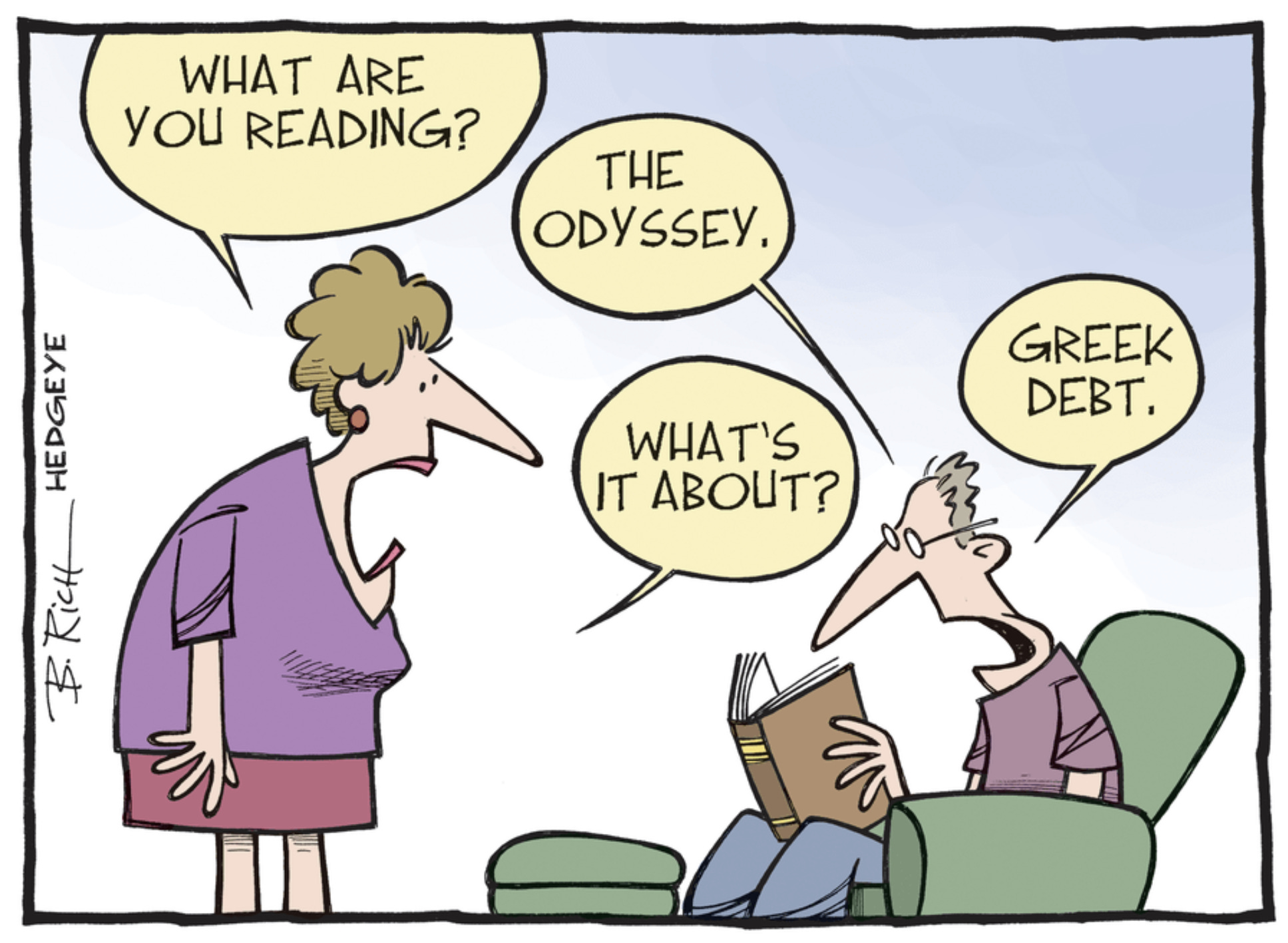
Reading in America has become deeply polarized. Most books are now read by a small minority of heavy readers, while a large share of Americans reads none at all.
According to a new YouGov survey, 40% of Americans did not read a single book in 2025. Among those who did read, most finished only one or two books, while a small minority accounted for the bulk of all reading.
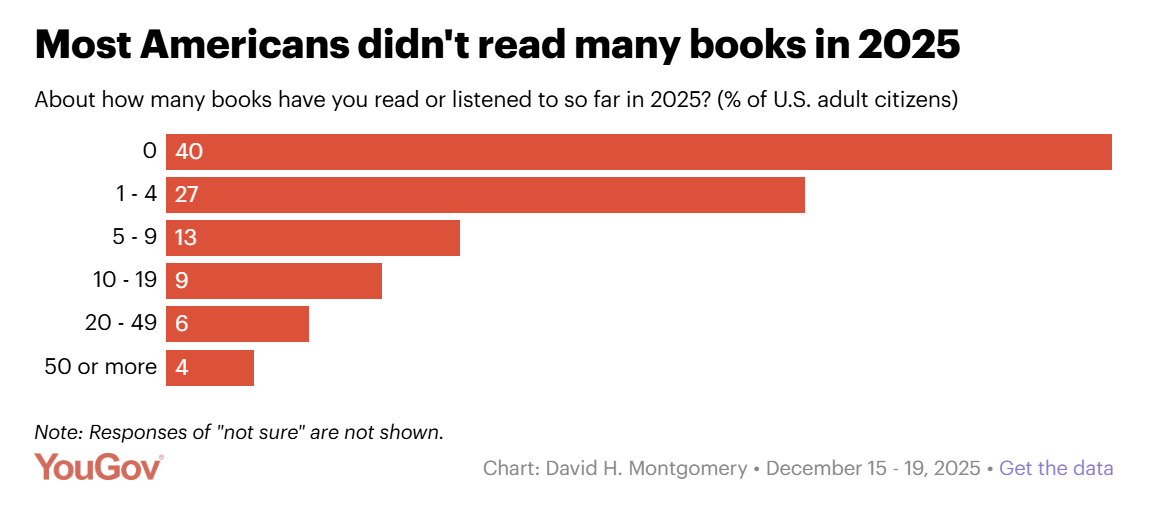
These results closely mirror findings from the 2023 and 2024 surveys. But zooming out, the long-term decline in reading is unmistakable. In 1999, a Gallup survey found that Americans read an average of 18.5 books per year. Today, YouGov estimates that number at just 8.0, a decline of more than -50%.
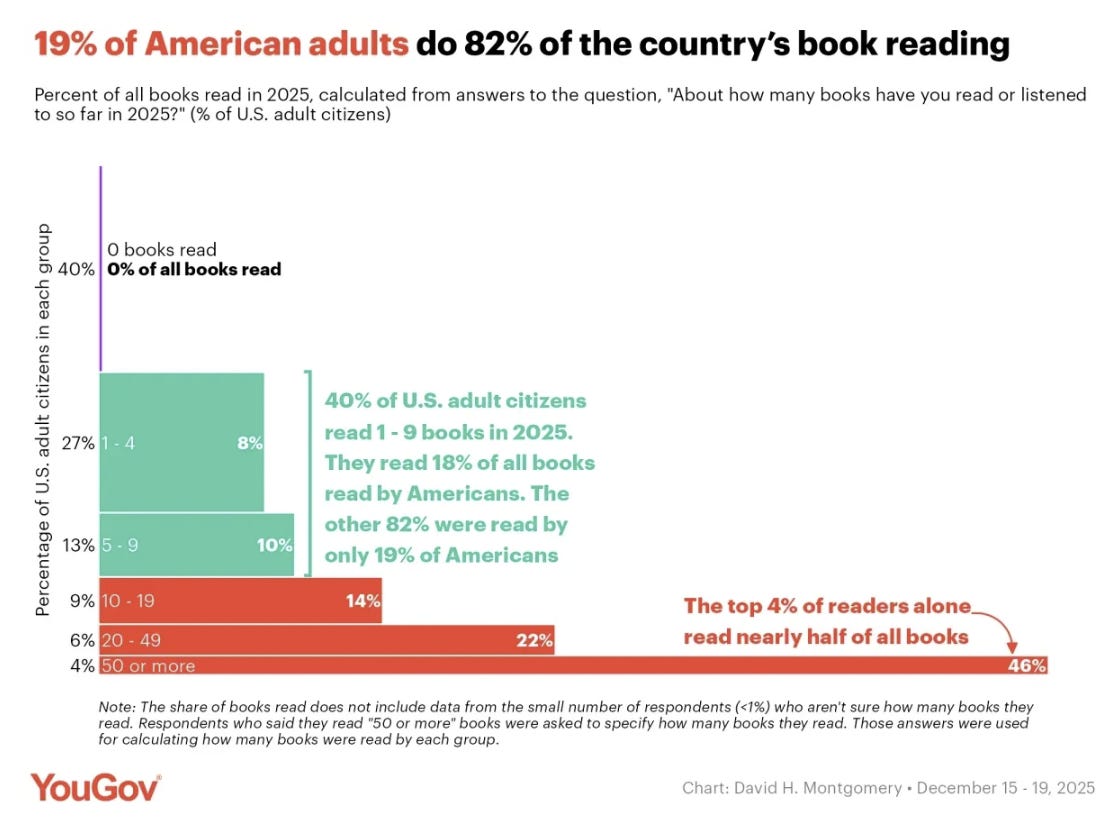
Even more striking is how unequal the distribution of readers has become. The median number of books read is only two. The wide gap between the average and median is driven by a small minority of prolific readers whose high book counts skew the overall average upward. Just 19% of US adults account for 82% of all books read, and the top 4% alone account for nearly half (46%).
By format, physical books still dominate. Nearly half of US adults (46%) read at least one physical book, compared with 24% who read an e-book and 23% who listened to an audiobook. The e-book revolution publishers predicted a decade ago never fully materialized.
So what’s behind the decline in American reading? In large part, it’s generational change. (See “Americans Are Reading Fewer Books.”)
The Silent Generation was the last cohort to grow up without television in the home. As a result, they developed lifelong reading habits. Boomers, though impacted early by TV, also turned out to be a heavy generation of readers by midlife. Surveys have shown that Gen Xers, on the other hand, have consistently read less (both books and news) than Boomers at every phase of life. The current YouGov survey, for example, shows Americans age 45-64 (mostly Xers) reading only half the average number of books (6.4 versus 12.1) as Americans age 65+ (mostly Boomers).
Millennials actually show a bit of a resurgence in reading: Americans age 30-44 read 8.2 books per year on average. If Millennials read more as they grow older, as Boomers have done to some degree, they may help reverse the recent population-wide decline. What they won’t reverse, however, is the growing inequality in the distribution of readers—with readership falling only slightly among college young adults, but steeply among non-college young adults. As we have pointed out elsewhere, readership trends mirror what we’re seeing in K-12 attendance rates and achievement scores: a much steeper decline among children of noncollege parents. (See “K-12 Proficiency Scores Continue to Tumble.”)
To be sure, the rise of streaming and social media has also played a role in the decline in reading. Americans of all ages now spend far more time on screens, crowding out time that might otherwise be spent with a book. This trend too shows a similar socioeconomic divergence: Specifically, adults with high school education or less are four times more likely to be smartphone-dependent (24%) than college graduates (6%).
I will admit I've spent time reading books due to spending time on social media (and reading various articles on substack and blogs on my desktop computer). I'm still a person who'd rather read any news as opposed to watching it.
Seems our society is getting less literate in general when the "recommended" way to get instructions is to watch them on You Tube as opposed to reading them.
But have noticed that the local Barnes and Noble is generally very crowded so there are still readers out there.
I have to say much of this article really hits Home for me. I teach children music, which isn’t exactly reading, but I’m aware that most of them don’t read books much. In addition to music I enjoy writing fiction. But as for being an active reader, I’m a GenXer, and I’d have to say until the Internet and cell phones became widely available, Say the year 2000 or so, I was a pretty voracious reader. These days? Not so much! at least not a physical paper anyway. I mean, I read these articles, Ha ha.