



Young men are reporting a sharp rise in religiosity. Young people are now the only age group in which men place greater importance on religion than women.
Over the last two decades, American religiosity has steadily declined. (See “Is America Losing Its Religion?”) Church attendance has fallen, affiliation has weakened, and a growing share identify as religious “nones.” But one group is now reversing that trend: young men.
According to a new Gallup survey, in 2025, 42% of men ages 18-29 said that religion was “very important” in their lives. That’s a +14 percentage point increase since 2023, when only 28% said the same thing. Young men’s religiosity is nearly back to its 2001 level of 43%.
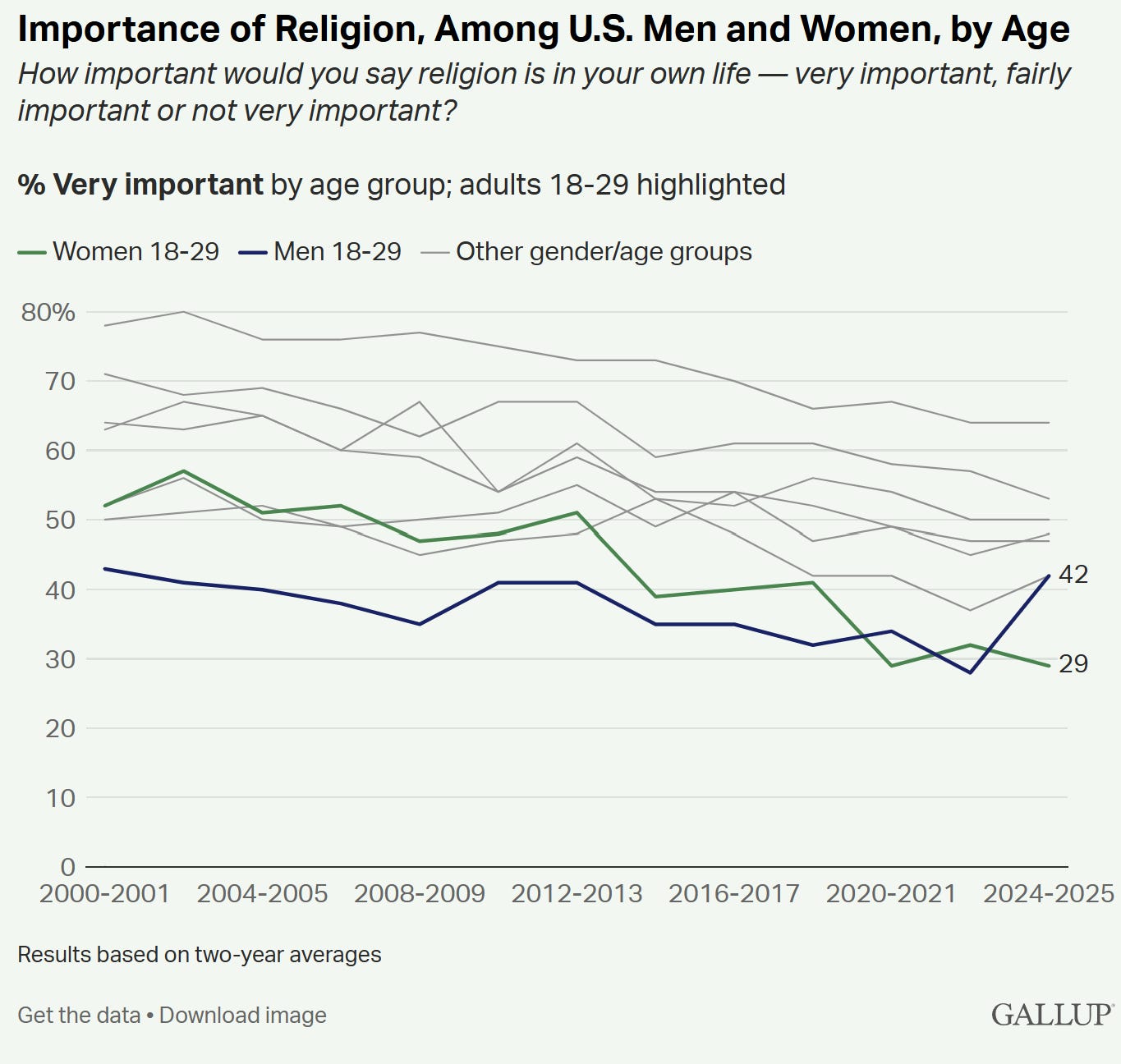
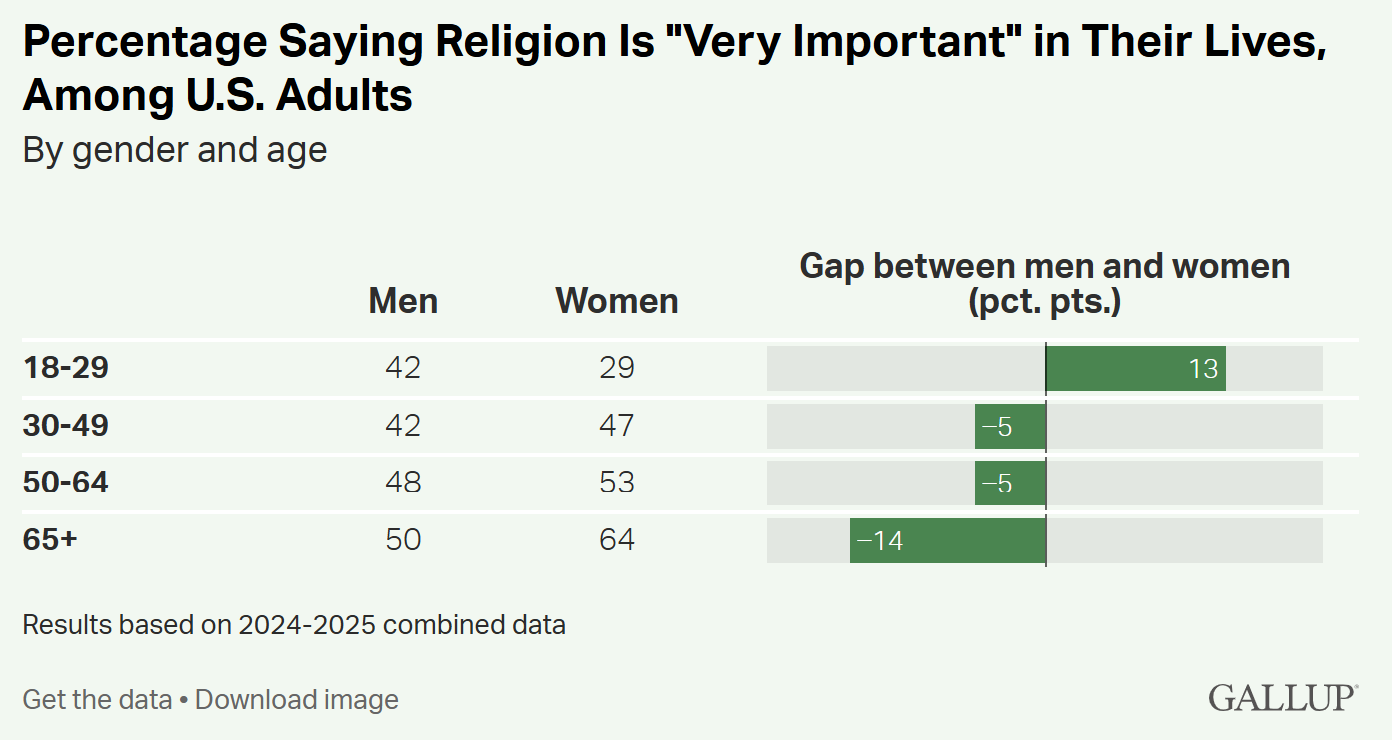
This surge in religion among young men stands in sharp contrast to young women. Just 29% of women ages 18–29 say religion is “very important” in their lives, a -3 percentage point decline since 2023. That leaves a striking 13-point gap between genders. In fact, young adults are now the only age group in which men report higher religious importance than women. This is a clear break from the historical norm, where women at every age have consistently expressed more interest in religion than men.
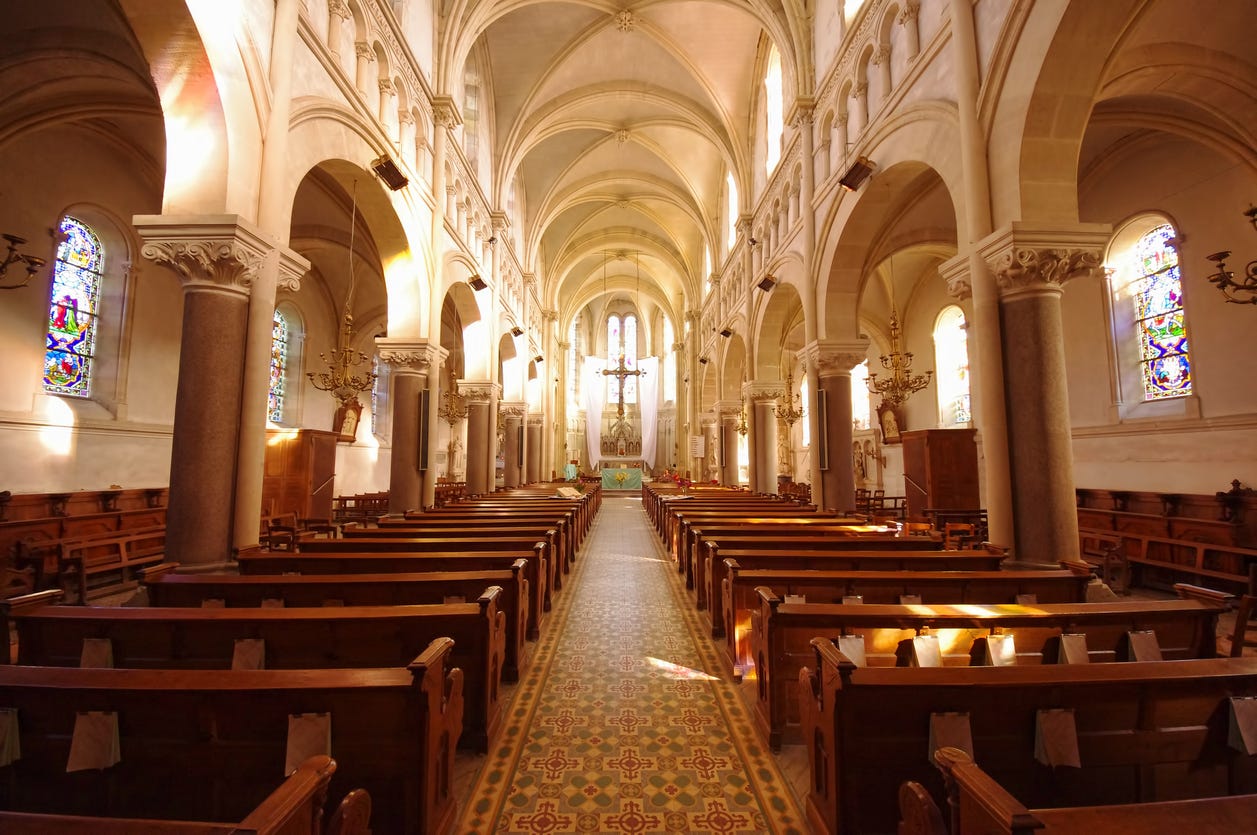
On the ground, churches are reporting a similar shift. Catholic and Orthodox congregations in particular say they are seeing an influx of men in their 20s. Anecdotally, new converts often point to a desire for community, a search for meaning beyond an increasingly digital world, and inspiration from figures like Charlie Kirk.
As the example of Kirk may suggest, many of these longings—for community, direction, inspiration—come together for young men in Christian Nationalism. A sizable share of young men has shifted toward the Republican Party in recent years, and insistence on religiosity, usually Christianity, is often tied to a conservative identity. (Just as insistence on no religiosity is tied to a progressive identity; see “More on the Widening Youth Gender Divide.”) In that sense, saying religion is “very important” or “unimportant” may function less as a reflection of your institutional religious ties and more as a signal of your tribal identity, red zone or blue zone.
The data from Gallup appears consistent with that interpretation. While the share of young men who say religion is “very important” has risen by +14 percentage points, the share attending church at least once a month has increased by just +7 points, to 40%. In other words, the rise in stated belief is outpacing the rise in behavior.
It also turns out that both young men and young women are attending church somewhat more today (2024-25) than they were a few years ago (2020-21)—again, about +7% more—though attendance by all older age groups has declined. While this is mostly among young Republicans, it can also be seen among young Democrats. So there is something of a “church revival” among young people across the board. The difference, for young conservative men, is that even those who don’t go to church embrace the identity shift. It’s a big deal. It’s “very important in my life.”
In Catholicism, there appears to be a pretty clear split in young men between a hard right interpretation of Catholicism (a la Vance) versus the social justice version Pope Leo is advocating very publicly. Leo's approach is reportedly (media) being enthusiastically received by Gen Z, which makes sense to me in terms of generational values. Given this new Pope and his very public stances, data that follows new Gen Z Catholics may yield the first real clues about which way Gen Z men are headed, as Catholic data may be easier to identify and sort than the broad, looser category of Evangelical. Your thoughts? And if you're posting more on generations, many thanks!