



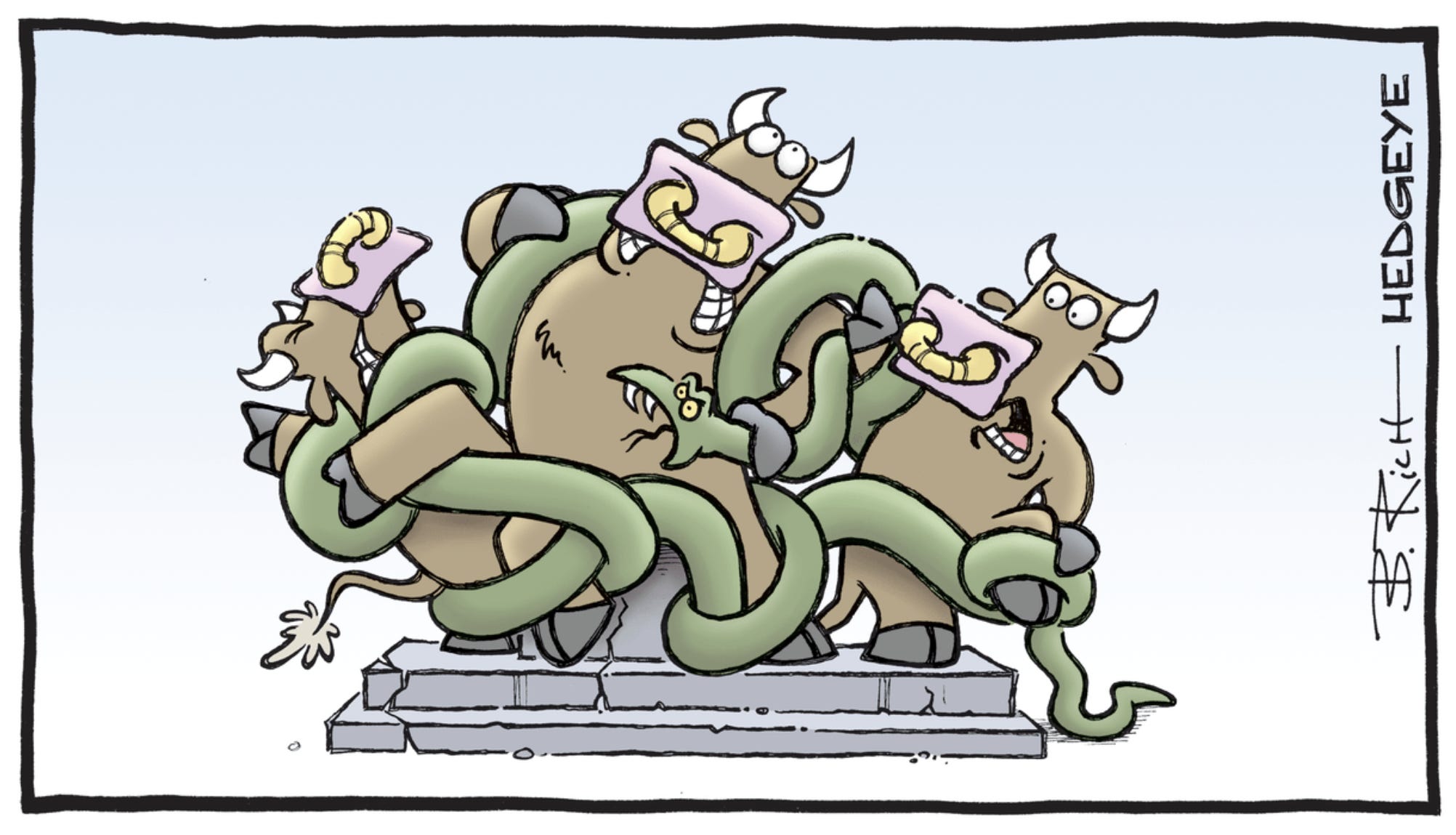
Americans are more likely than people in other countries to say their society is immoral. They also express some of the strongest moral judgments about their own people’s behavior.
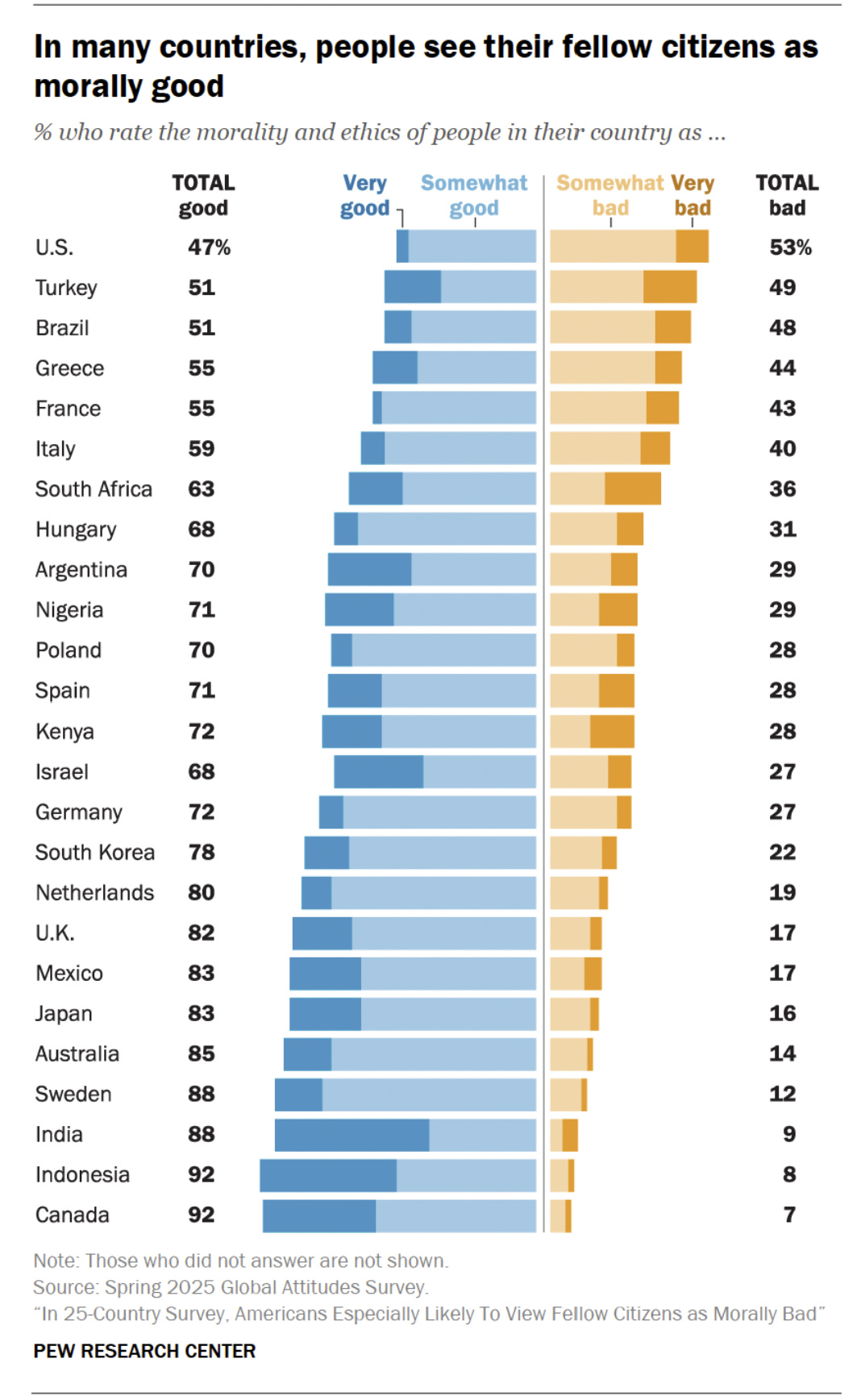
According to a new Pew survey spanning 25 countries, Americans are the most critical of their fellow citizens. Fully 53% of US adults say the morality and ethics of Americans are “somewhat or very bad.” That’s +25 percentage points above the cross-country median (28%). What’s more, the US is the only country where a majority believes their fellow countrymen are more bad than good.
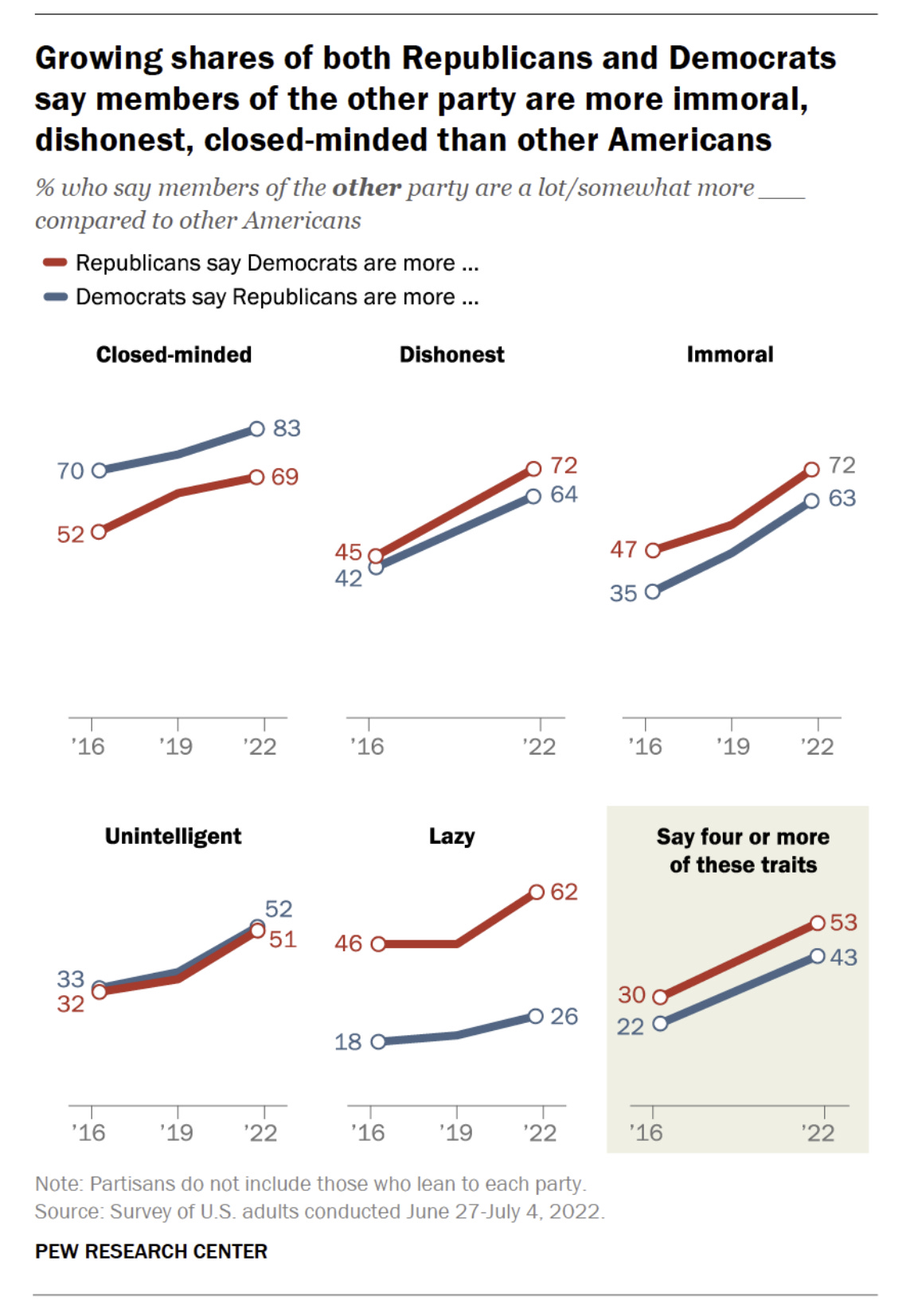
This is the first year Pew has asked this question, so there’s no historical data to show whether Americans are becoming more judgmental over time. But other data suggest partisan views of morality have hardened in recent years.
Between 2016 and 2022, the share of Republicans who say Democrats are immoral rose +25 points, to 72%. And the share of Democrats who say Republicans are immoral climbed +28 points, to 63%. Similar increases occurred in how each party demonizes the other: closed-minded, dishonest, unintelligent, and lazy.
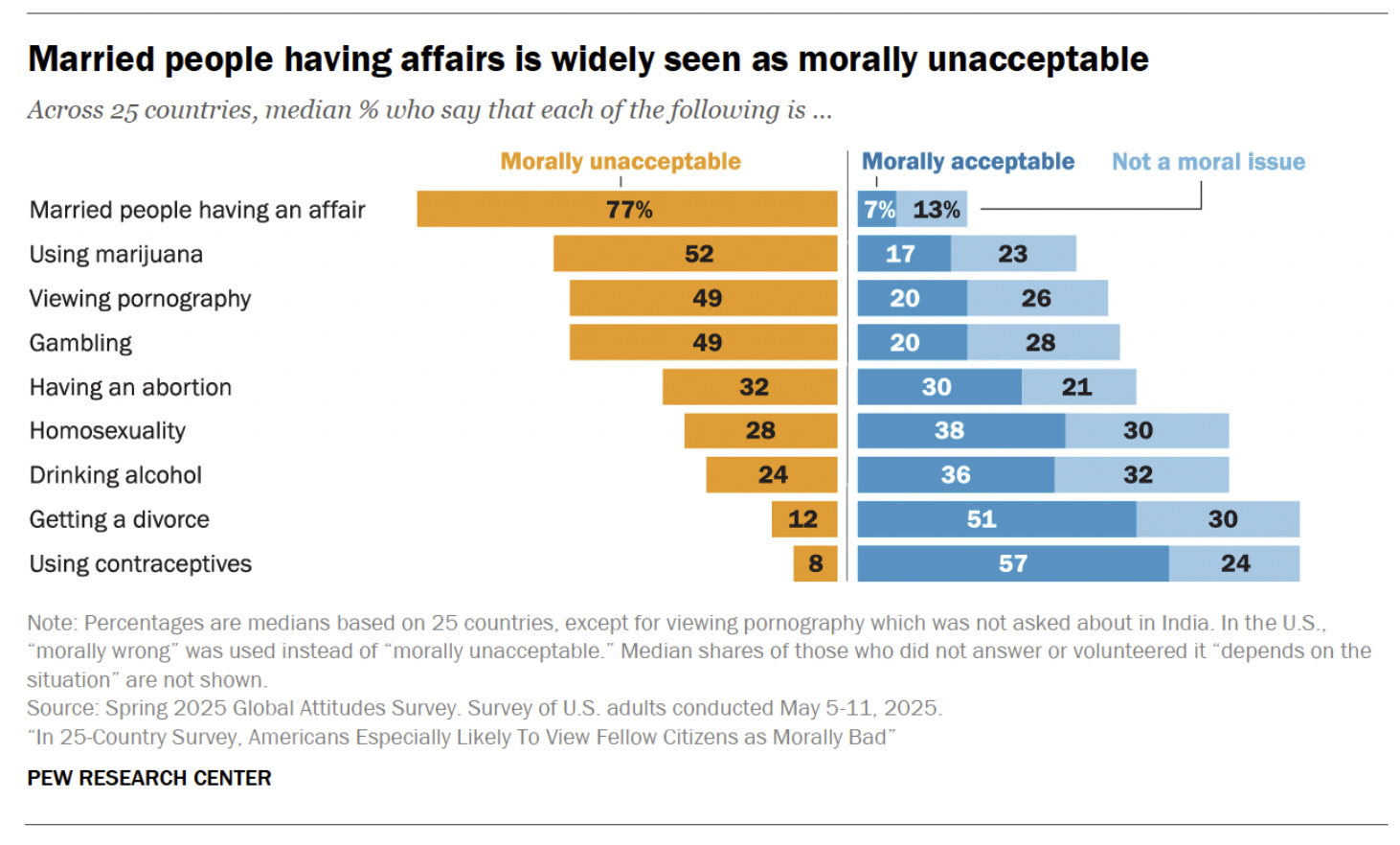
At the same time, Americans appear to have stricter standards of morality than most of the countries surveyed. Pew asked respondents whether nine behaviors were morally acceptable or unacceptable. In many cases, Americans were more likely than others to condemn them.
For example, 90% of Americans say extramarital affairs are morally wrong, +13 percentage points above the cross-country median (77%). 39% say homosexuality is immoral, +11 points above the median (28%). And 23% say getting a divorce is unacceptable, also +11 points above the median (12%).
However, in two areas, Americans were among the most permissive in the world. Only 23% say using marijuana is morally wrong, -29 percentage points below the cross-country median (52%). And just 29% say gambling is immoral, -20 points below the median (49%). That said, other surveys suggest American attitudes toward sports betting are becoming more negative as legalization spreads. (See “The Sports Betting Backlash Has Begun.”)
Because this is the first time Pew has fielded these questions, we cannot yet tell from this survey how Americans have changed over the last decade. But we do know that cultural attitudes have shifted in a more conservative direction over the last several years. (See “Social Conservatism Has Risen Since the Pandemic” and “LGBT Identification Rises, But Public Support Declines.”) Since it’s plausible that conservatives use a higher bar of acceptability in responding to these nine questions, then it probably is true that the recent trend is toward more judgmentalism.
The current Fourth Turning has brought a renewed interest in asserting—and perhaps even enforcing—boundaries of acceptable behavior.
The Republicans had already portrayed the Democrats as "evil" due to being pro-choice on abortion so were able to successfully sell themselves to the religious of both the Catholic and Evangelical persuasions. But those who voted "pro-life" did not consider the rest of the Republican agenda at all, and if carried to its logical extreme, they'd vote for Hitler if he promised to overturn Roe vs Wade. (And that's exactly what happened. Trump is Hitleresque.)
But since the election of Trump, the Republican policies have become downright cruel. And thus, Democrats can credibly portray the Republicans as evil.
So now we have both sides portraying one another as evil. (Not a good way for a nation to endure.)
Glad to know I'm a moral cesspool. I thought they were.