



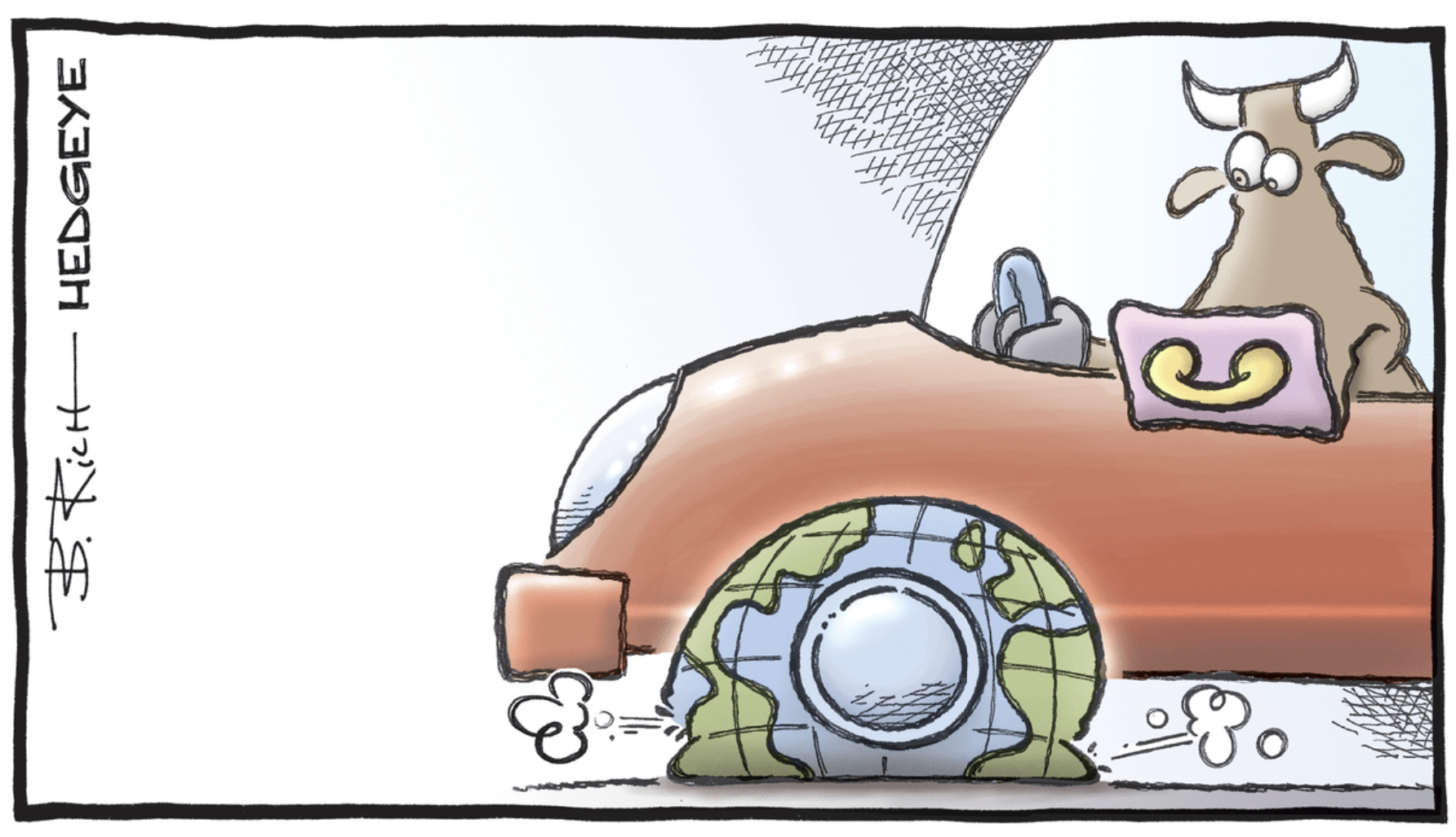
Most Americans now believe self-driving cars will become commonplace within the next decade. But despite growing expectations for adoption, public trust in the technology remains low.
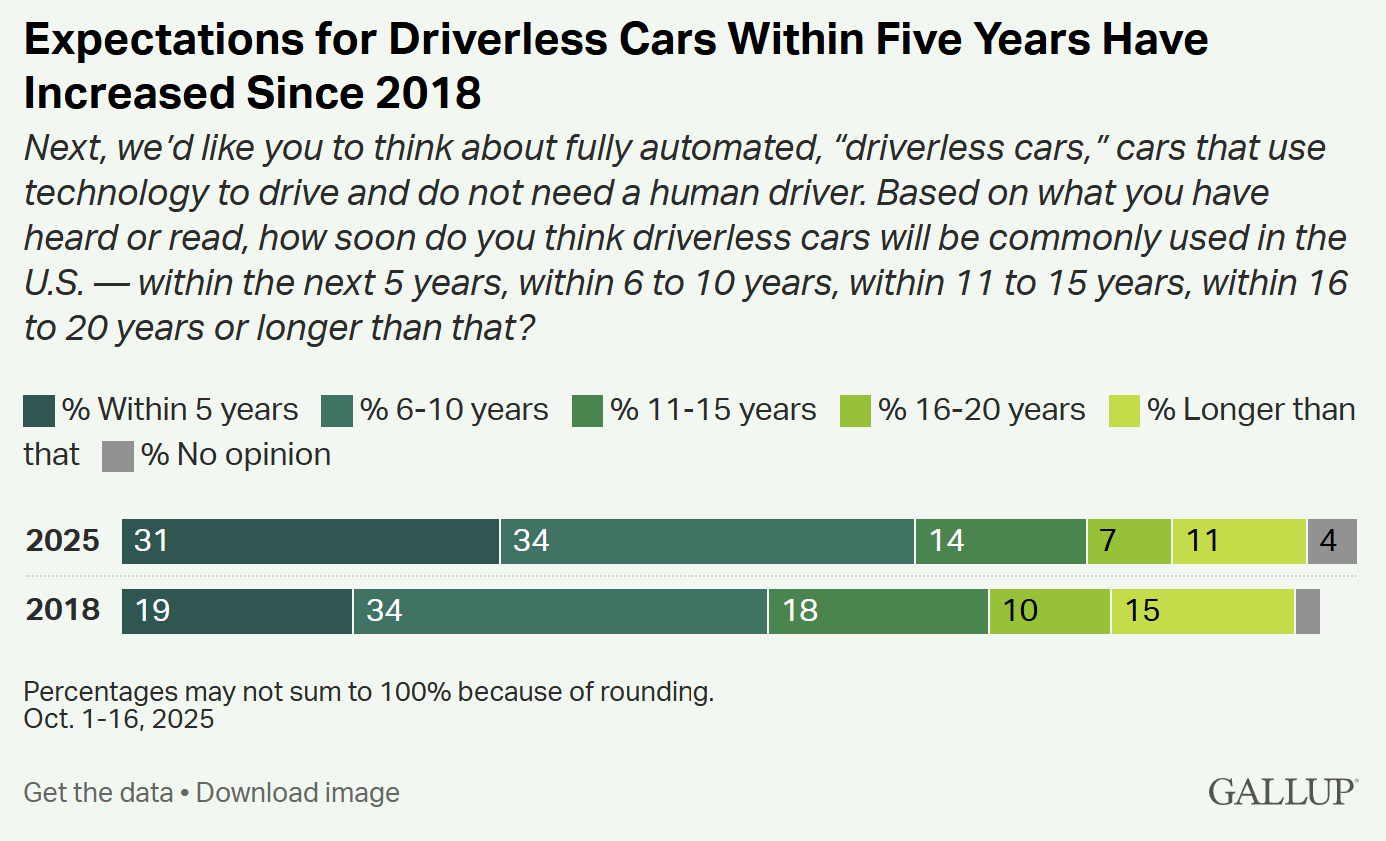
According to a new Gallup survey, Americans increasingly believe that self-driving cars are the future of transportation. Fully 31% of US adults believe driverless cars will be commonly used within the next five years. That’s a +12 percentage point increase from 2018, when just 19% said the same.
An additional 34% believe autonomous vehicles will become commonplace within the next decade. Altogether, 65% of Americans expect driverless vehicles to be widely used within 10 years.
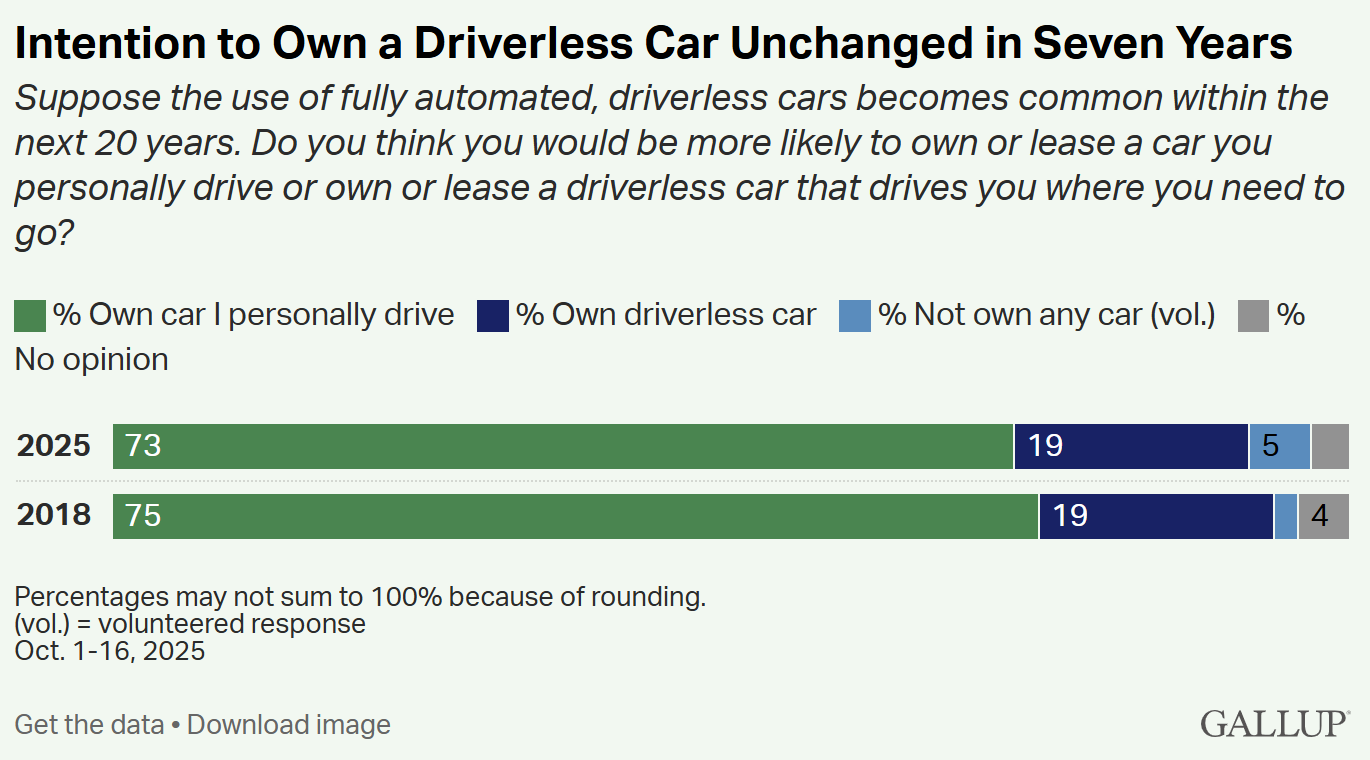
But that doesn’t mean Americans are eager to buy one themselves. Just 19% say they would purchase a self-driving car if the technology became widely available within the next 20 years, unchanged from 2018. Meanwhile, 73% say they would still prefer a vehicle they personally drive, statistically unchanged from seven years ago (75%).
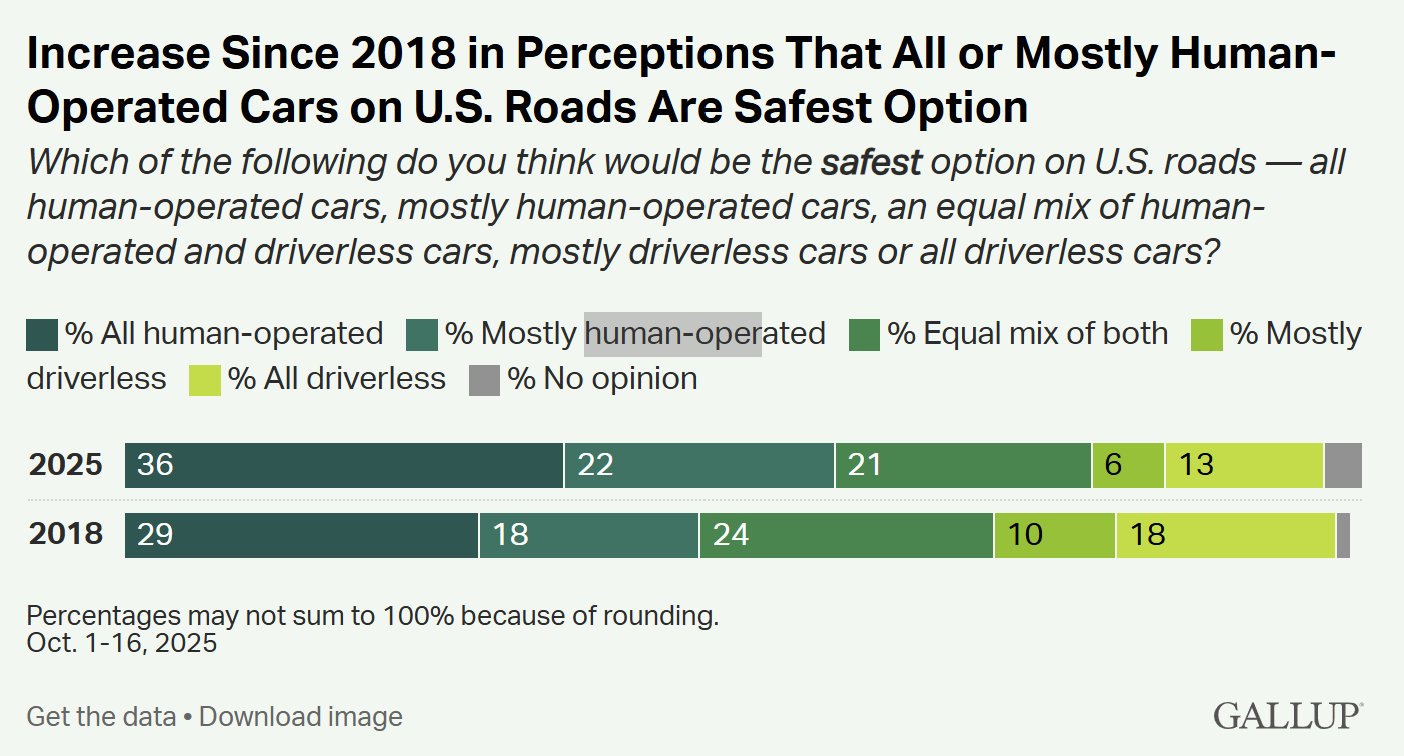
In fact, Americans are now more—not less—concerned about the safety of driverless cars. In 2018, 47% said the safest roads would be those with mostly or entirely human-operated vehicles. Today, that figure has climbed to 58%, up +11 percentage points.
Driverless car companies are quick to argue that autonomous vehicles are safer than human drivers. But many industry experts remain skeptical that the data fully reflect how these systems would perform at scale. Over the years, we have also questioned whether the technology is truly ready for widespread adoption. (See “Americans Grow Cold on Self-Driving Cars” and “Self-Driving Cars Still Stuck in Neutral.”)
The public’s hesitation has likely been reinforced by a series of high-profile incidents. Waymo, the robotaxi company owned by Alphabet, has been at the center of several viral controversies. In December, a Waymo vehicle appeared to drive through a police standoff. In January, one reportedly struck a child near a school. Then in March, another blocked an ambulance responding to a shooting scene.
If self-driving car companies want the public’s trust, it’s not enough for their vehicles to be safer on average. They also have to prove they won’t behave in ways that feel unnatural, unpredictable, or outright absurd. People can forgive human error. They are far less willing to forgive a machine driving through a police standoff.