



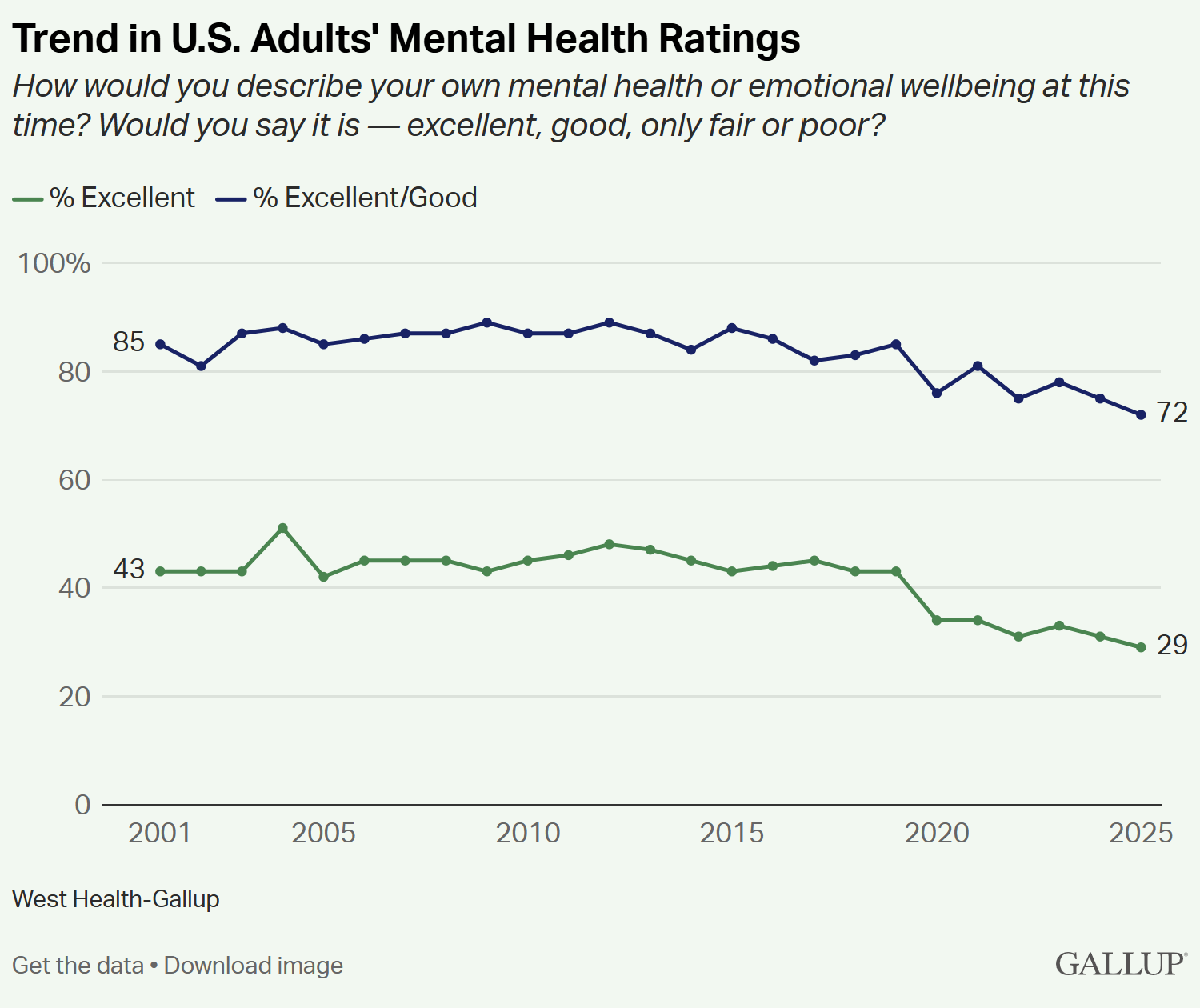
Self-reported mental well-being in the U.S. has fallen to a 24-year low. Gen Z and Millennials have seen the sharpest deterioration.
As the Fourth Turning grinds on, America’s mental health continues to deteriorate. In 2025, just 29% of Americans described their mental or emotional well-being as “excellent,” the lowest reading in Gallup’s 24-year history. That marks a 22-percentage-point decline from the 2004 peak of 51%. The steepest drop came in 2020 during the pandemic, and the share has continued to drift lower ever since.
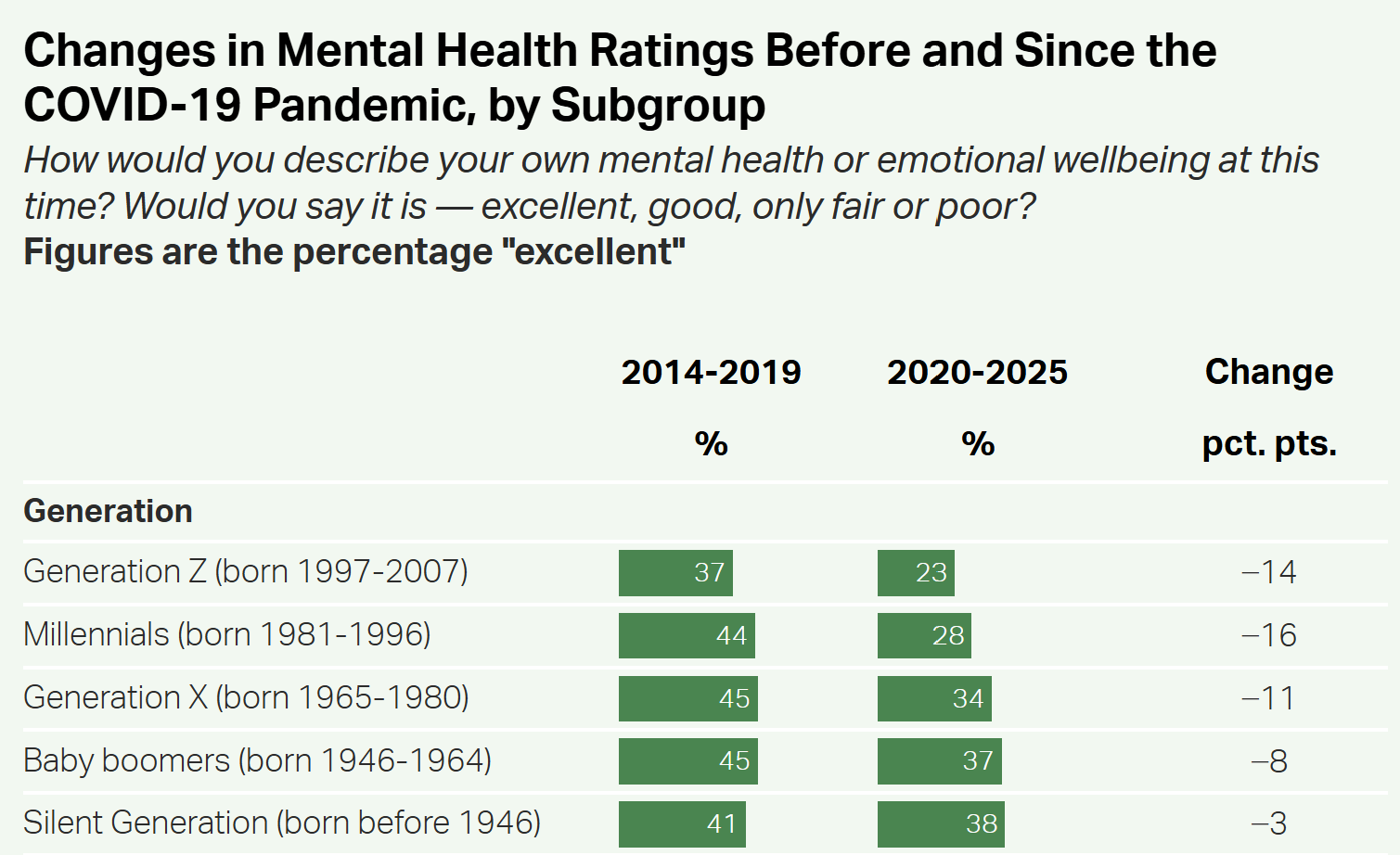
Over the past decade, mental well-being has declined across every demographic group, but the steepest drops have occurred among younger generations. The share describing their mental health as “excellent” has fallen -14 points among Gen Z-age youth and -16 points among Millennial-age young adults.
We have written numerous NewsWires about the deterioration in young people’s mental health. Explanations range from the rise of social media to growing financial stress to a greater willingness to confide in adults and pollsters. (See “Soaring Youth Demand for Mental Health Care.”)
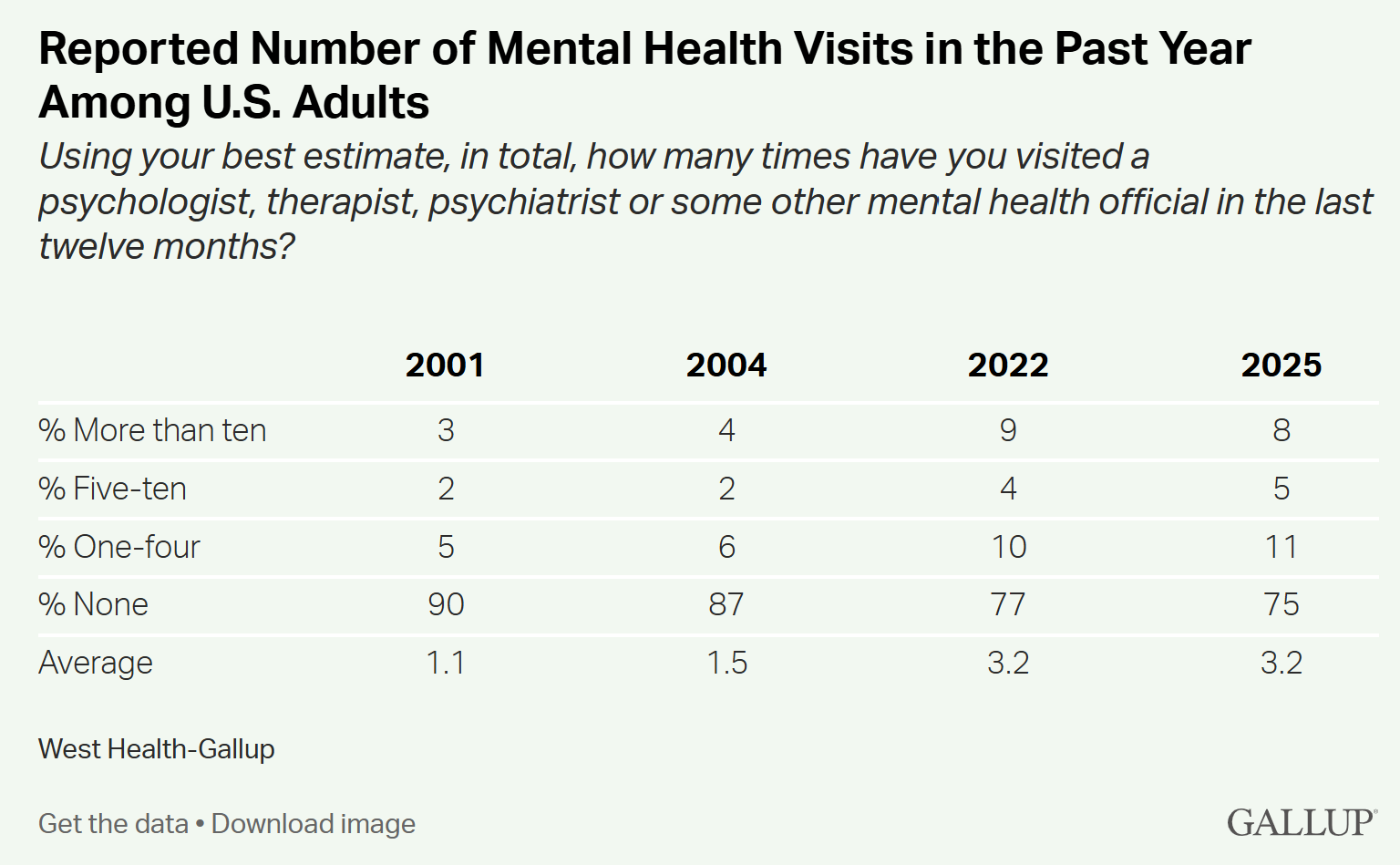
Over the past two decades, the share of Americans seeking professional help for their mental health has risen markedly. In 2001, just 10% of adults reported seeing a mental health professional. By 2022, that figure had climbed to 25%, where it has remained over the past three years. In other words, the recent deterioration in self-reported mental health has not been accompanied by a surge in doctor visits. At least, not yet.
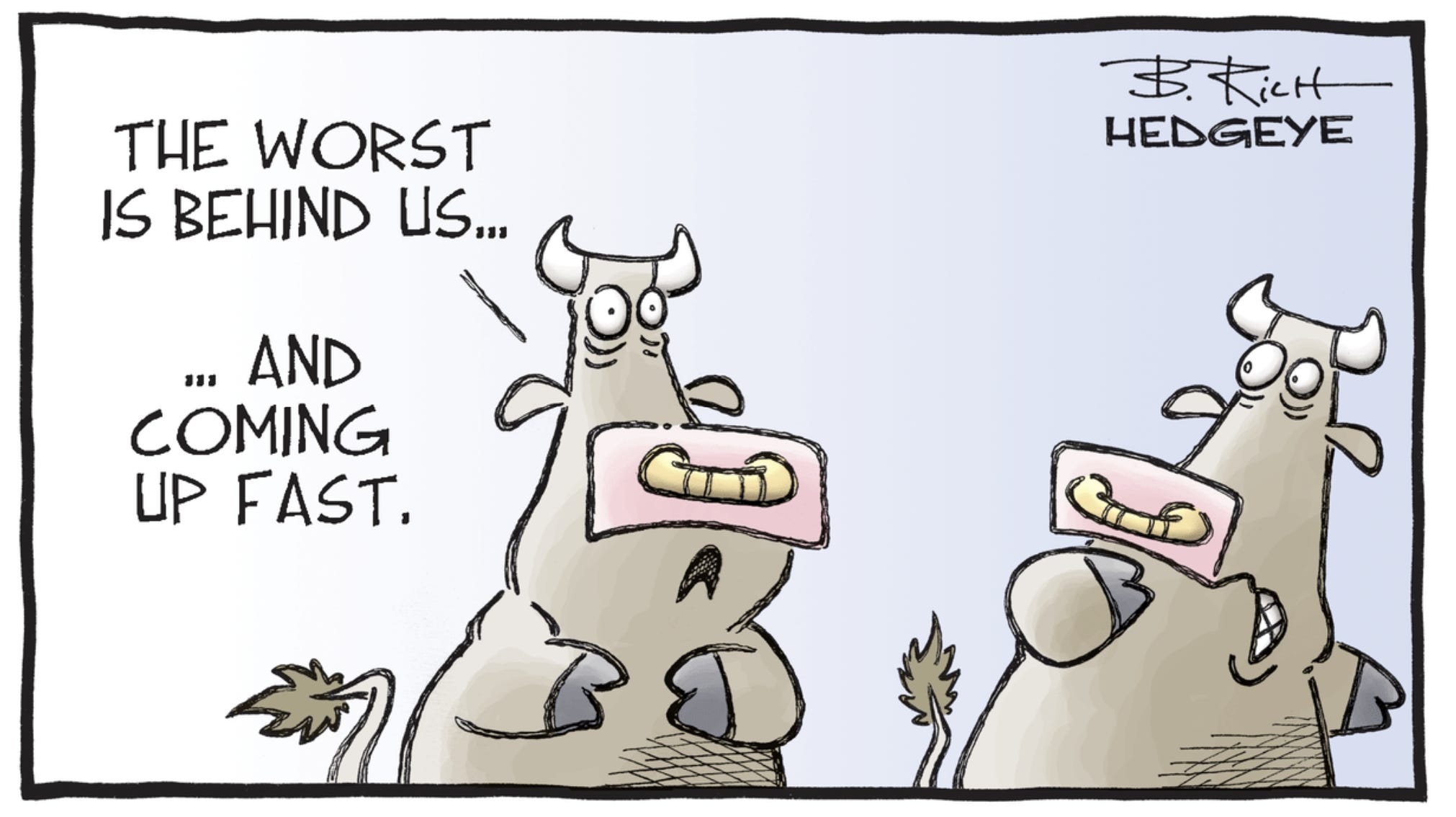
Americans’ emotional well-being is unlikely to improve in 2026. Midterm elections, intensifying political polarization, and persistent economic anxiety all point to continued strain. And if the SPX drops, the evidence shows that’s likely to push up depressive symptoms still higher, at least in the near term. FOMO may seem stressful—until you confront delaying your retirement.