



Marijuana use has surged among Americans 65 and older. The shift reflects Boomers replacing earlier generations and carrying their weed habits into older age brackets.
Over the past two decades, marijuana use has increased across every age group. But the fastest growth has occurred among seniors. According to the National Survey on Drug Use and Health, just 0.3% of Americans aged 65 and older reported using marijuana at least once a year in the early 2000s. By 2024, that share had risen to 10.0%, a more than 30-fold increase. Today, 6.6% of seniors report using marijuana on a monthly basis.
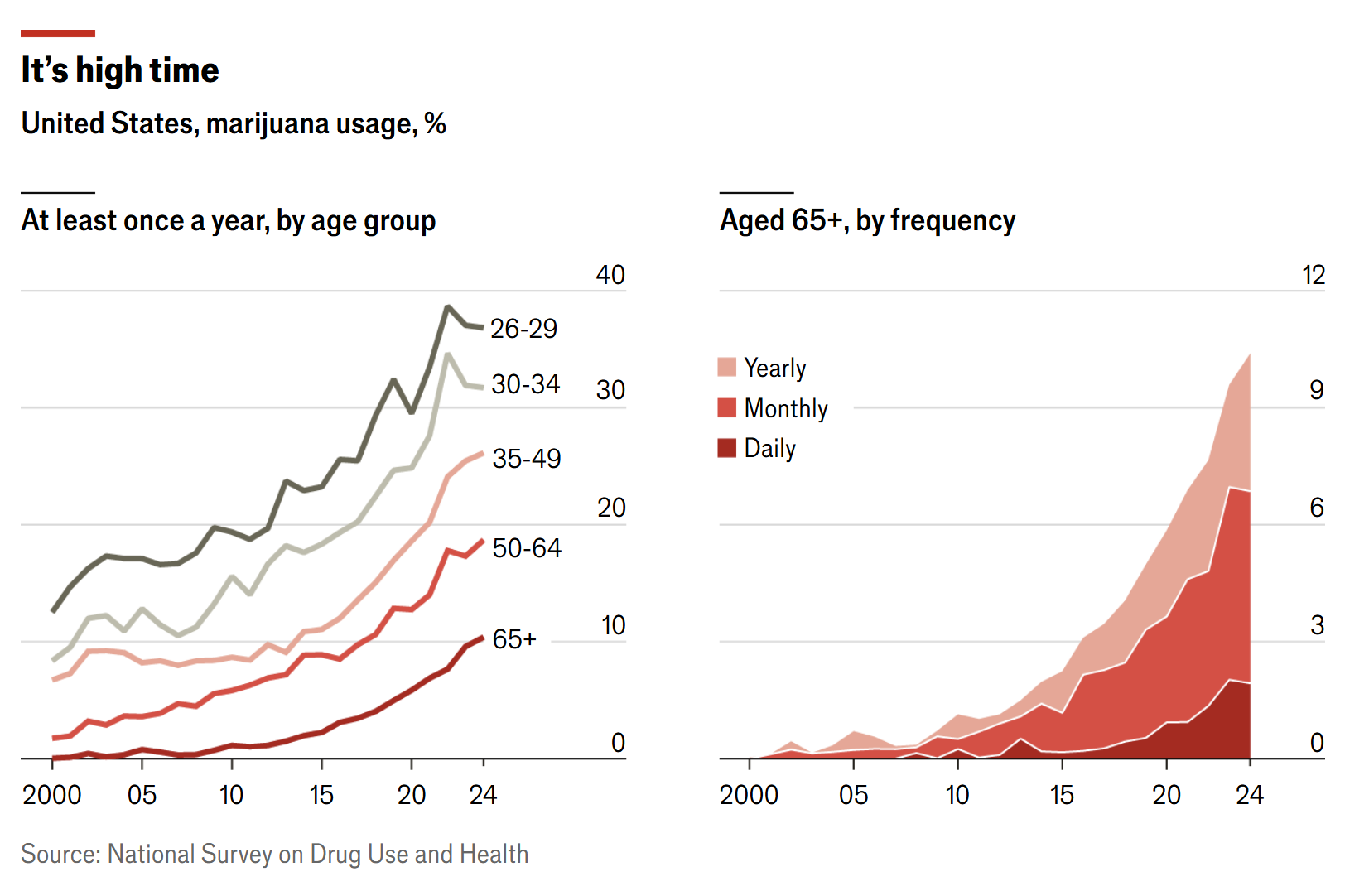
What’s behind this surge in senior weed consumption? Generational aging. In the early 2000s, the 65+ age bracket was comprised of the GI and Silent generations. These two groups were never known for their drug use. But over the last 25 years, the 65+ bracket has become mostly comprised of Boomers. And this Deadhead cohort has brought their weed habits with them into older age brackets. (See “Boomers Spend Big on Cannabis Products.”)
Expanded access has also played an important role. Recreational marijuana is now legal in 24 states, while medical marijuana is legal in 40. As a result, just over half of Americans live in a county with at least one marijuana dispensary.
We recently published a NewsWire on the decline in public support for legal marijuana. We argued that the shift reflects rising polarization, with marijuana legalization increasingly viewed as a Democratic cause and therefore harder for some Republicans to support. (See “Marijuana Support Begins to Fade.”)
Nevertheless, on Thursday, Trump signed an executive order to reclassify marijuana as a less dangerous drug. The move would shift cannabis from Schedule I to Schedule III, placing it alongside drugs such as codeine and ketamine. The change is expected to provide meaningful tax relief for cannabis companies and expand opportunities for medical research. Even so, cannabis ETFs have fallen sharply since the announcement. Some investors viewed the move as disappointing since it is largely symbolic: It won’t alter marijuana’s illicit status.