



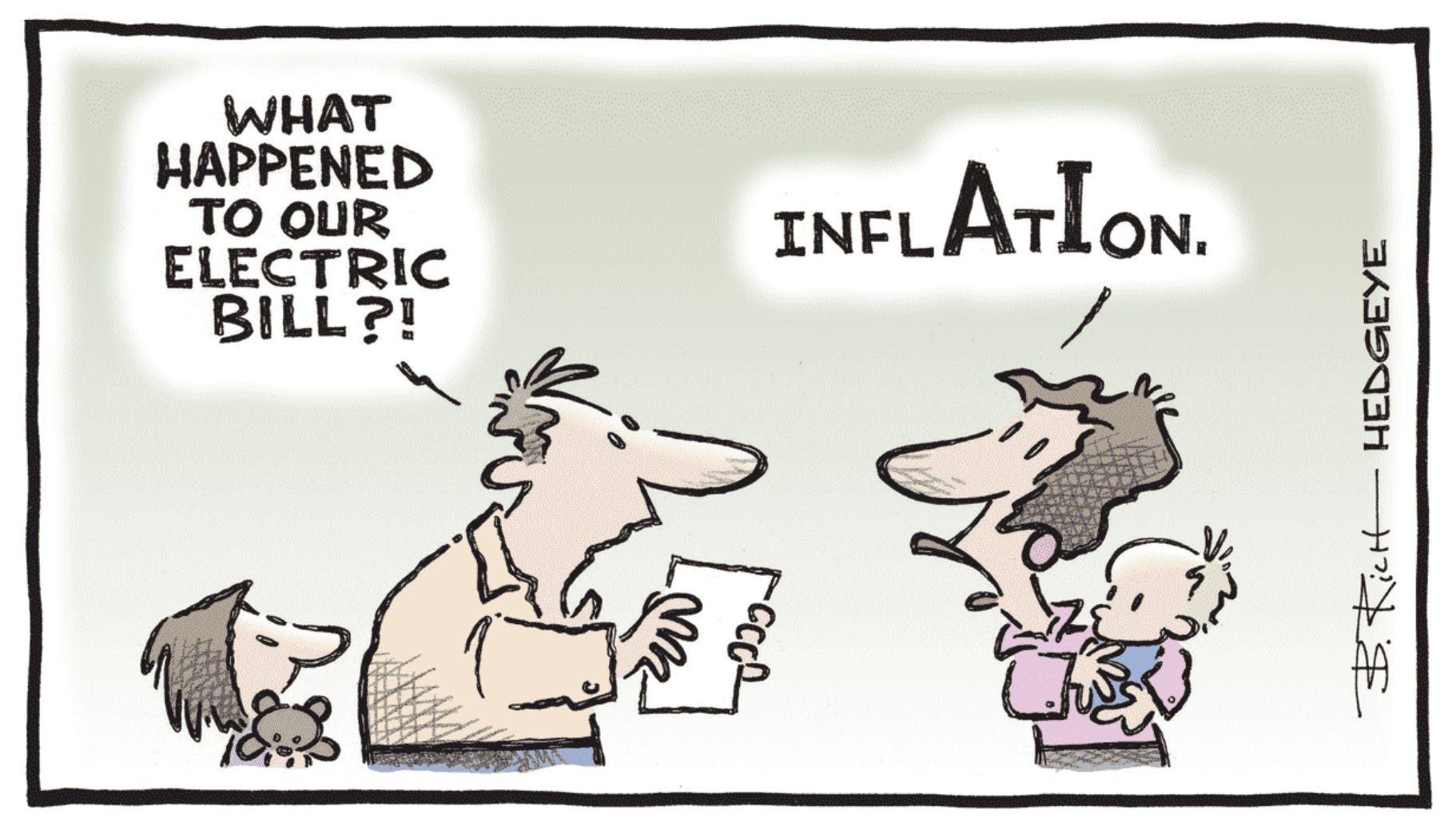
Public opposition to AI data centers is rapidly rising across the political spectrum. Americans increasingly fear the strain these facilities could place on water supplies, power grids, and local utility bills.
According to Pew, 38% of Americans now live within five miles of a data center. For years, local governments largely viewed these sprawling facilities as economic wins. But as the AI boom accelerates and new projects spread across the country, public sentiment is rapidly turning negative. A new poll from Gallup reveals just how strong the backlash has become.
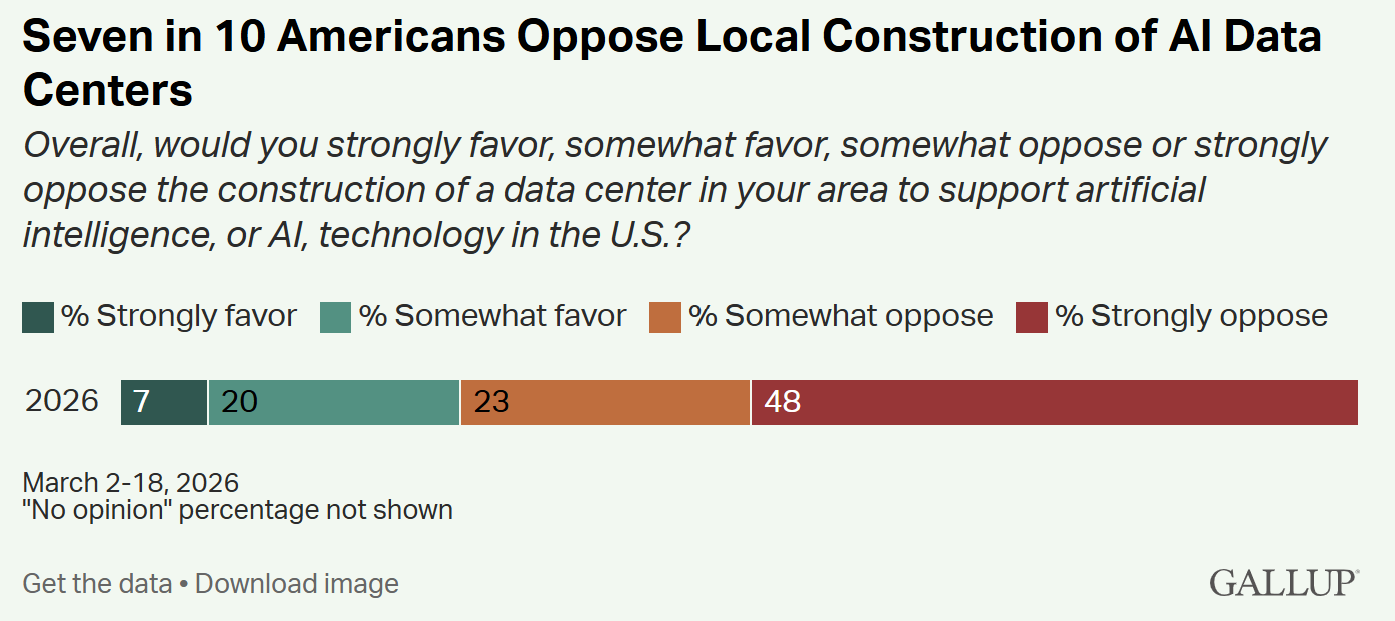
Fully 72% of US adults now oppose the construction of AI data centers in their local communities. That includes 23% who say they “somewhat oppose” new development and 48% who say they “strongly oppose” it. By contrast, only about one-quarter of Americans support building new facilities nearby.
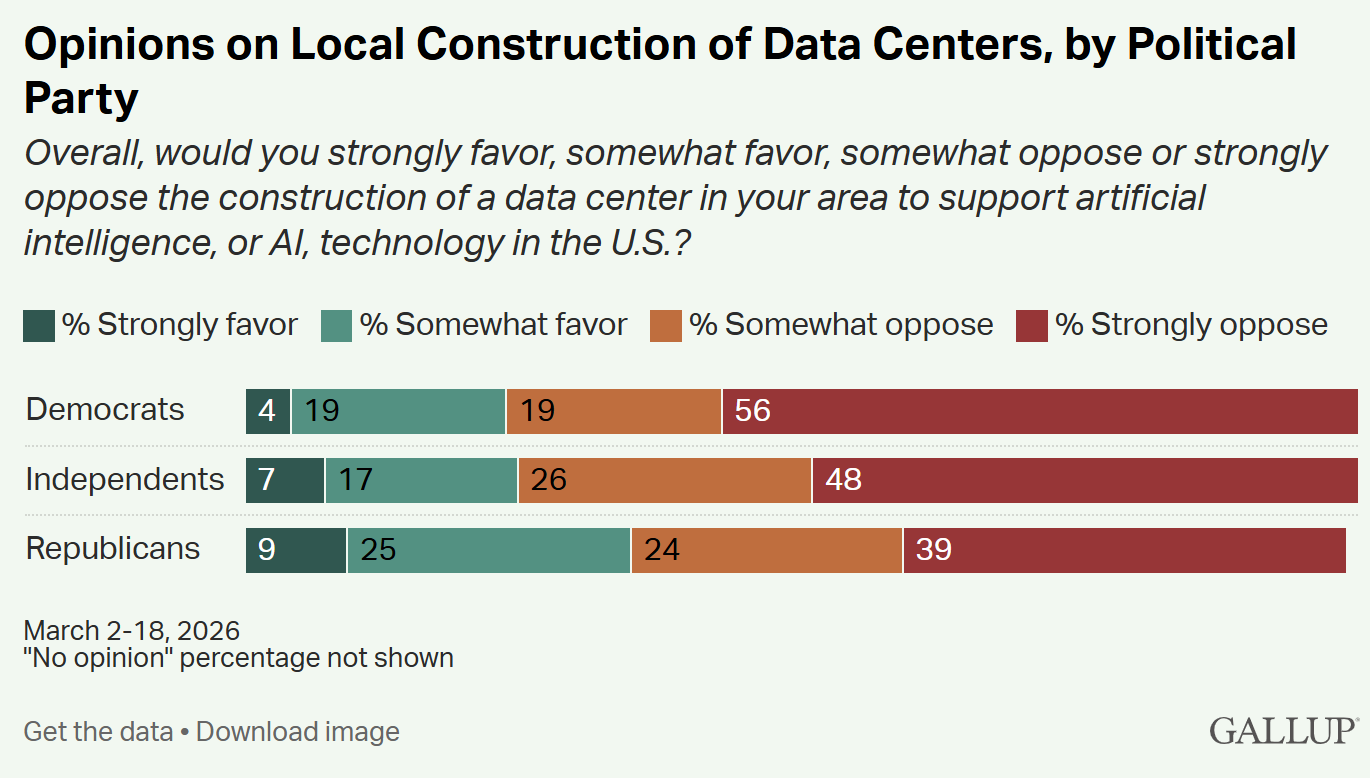
The backlash is remarkably bipartisan. Democrats and independents are the most resistant to new construction, with 75% and 74% opposed, respectively. But Republicans are not far behind: fully 63% also oppose building new AI data centers in their communities.
That growing resistance is now beginning to spill into the midterms. Candidates from both parties are increasingly questioning the generous tax breaks, subsidies, and energy deals once used to attract data center projects.
So what’s driving the backlash? Much of the opposition centers on the strain data centers place on local infrastructure. Fully 18% of Americans cite concerns about water usage, while another 18% worry about energy consumption and pressure on the electrical grid. An additional 15% specifically fear that new facilities could drive up utility bills.
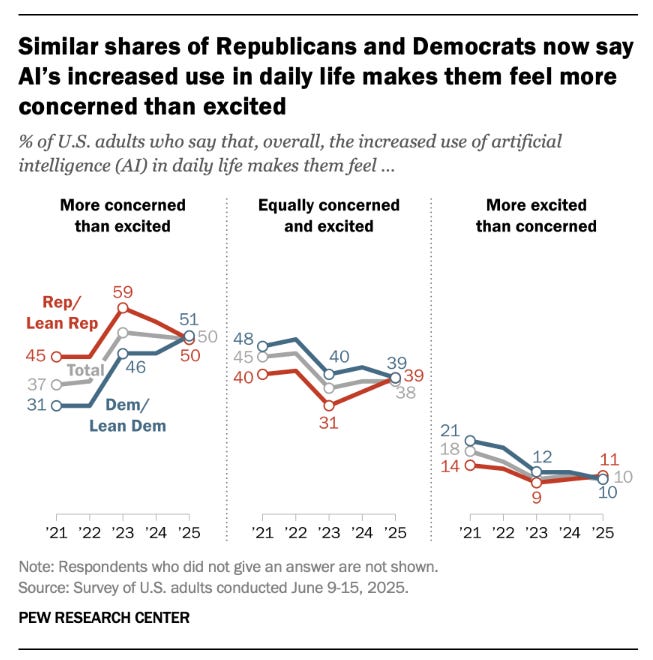
But the backlash also reflects growing skepticism toward AI itself. About 12% say they oppose new construction because they fear AI will replace human workers, while another 10% say they simply dislike AI altogether. Pew has been tracking overall favorability toward AI since 2021. Among voters is both parties, opinion has clearly been shifting from “excited” to “concerned.”
When we look around the world at attitudes toward AI in other countries, a paradoxical picture emerges: Among 25 nations surveyed by Pew, American adults are the most negative about AI, despite the face that the US economy stands to benefit the most from AI’s global success. This may simply reflect the fact that Americans have more up-close contact with AI. Or that countries with low institutional trust are more fearful about any change that may benefit one group over another.
Over the years, we’ve written several NewsWires about the growing techlash in America. But much of that backlash was aimed at social media companies. (See “Tech-Lash Intensifies” and “Americans Don’t Trust Big Tech.”) Now, AI is emerging as the new villain. Silicon Valley and Wall Street may be sold, but the public isn’t buying it. Just look at the wave of viral videos from this year’s college commencements, where speakers were booed after they declared that AI is the future. Back in the late-1990s, youth were mostly enthusiastic about the dot.com craze. No replay of that here.
One doesn't need to look far for existing examples. By late Nov 2025, the Virginia legislature largely gave free reign to AI on electricity, fighting off bills that would have prevented cost-shifting to the public. The new rates took effect Jan 1, 2026. One of our Millinnial kids has a tiny, gas-heated 1000 SF home in Virginia. For two years, his electrical bill was under $90/month. In January, his electrical bill went to over $300/month. A neighbor with a 1700 SF home saw his bill jump to $1200. Real life, not hypothetical.