



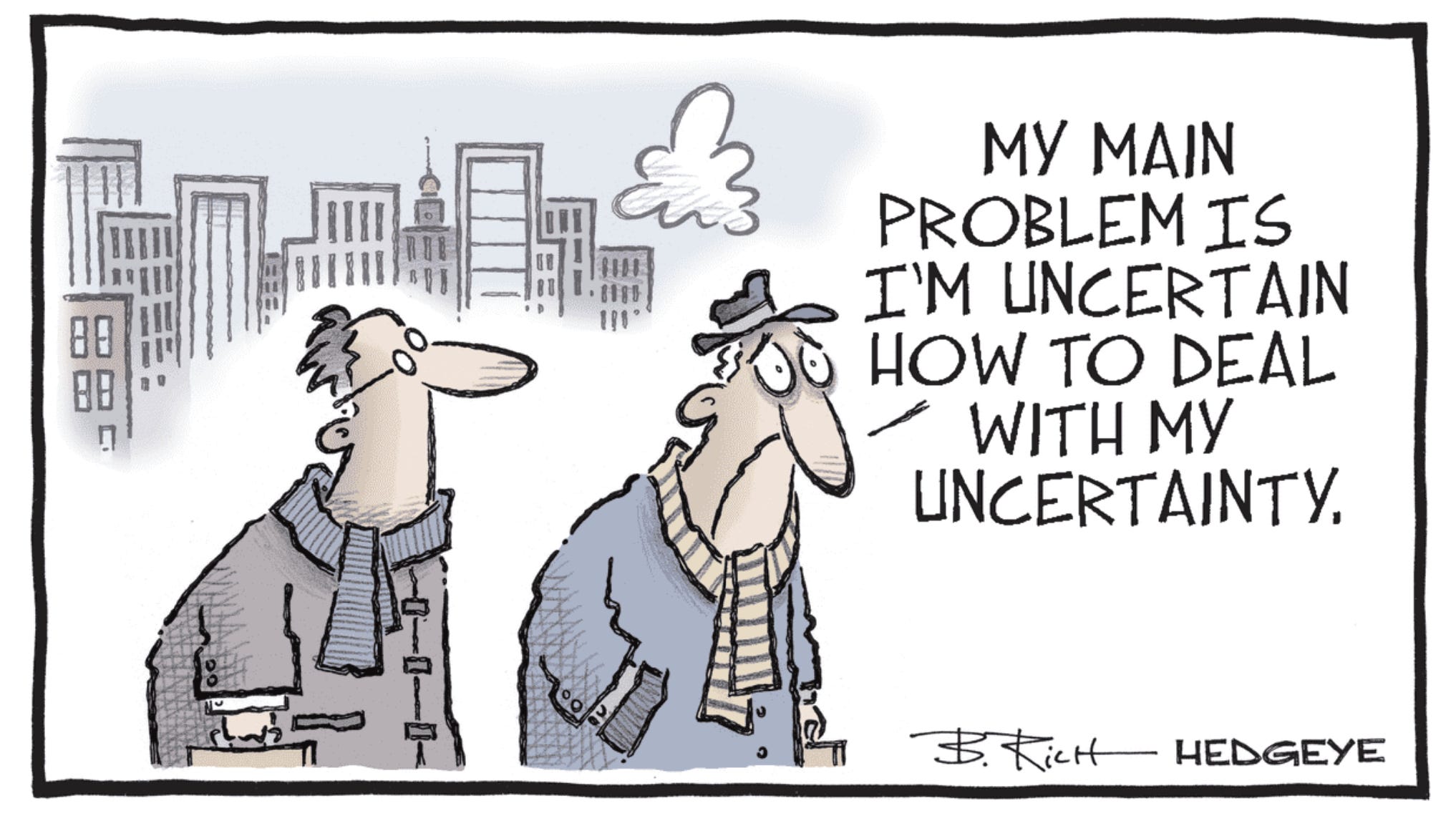
The share of Americans who say they are thriving is slipping toward a historic low. Expectations for the future are even worse.
It’s no secret the American mood has darkened since the Fourth Turning began. (See “The Fourth Turning in Pop Music.”) Now a new Gallup report puts hard numbers on just how bleak the outlook has become.
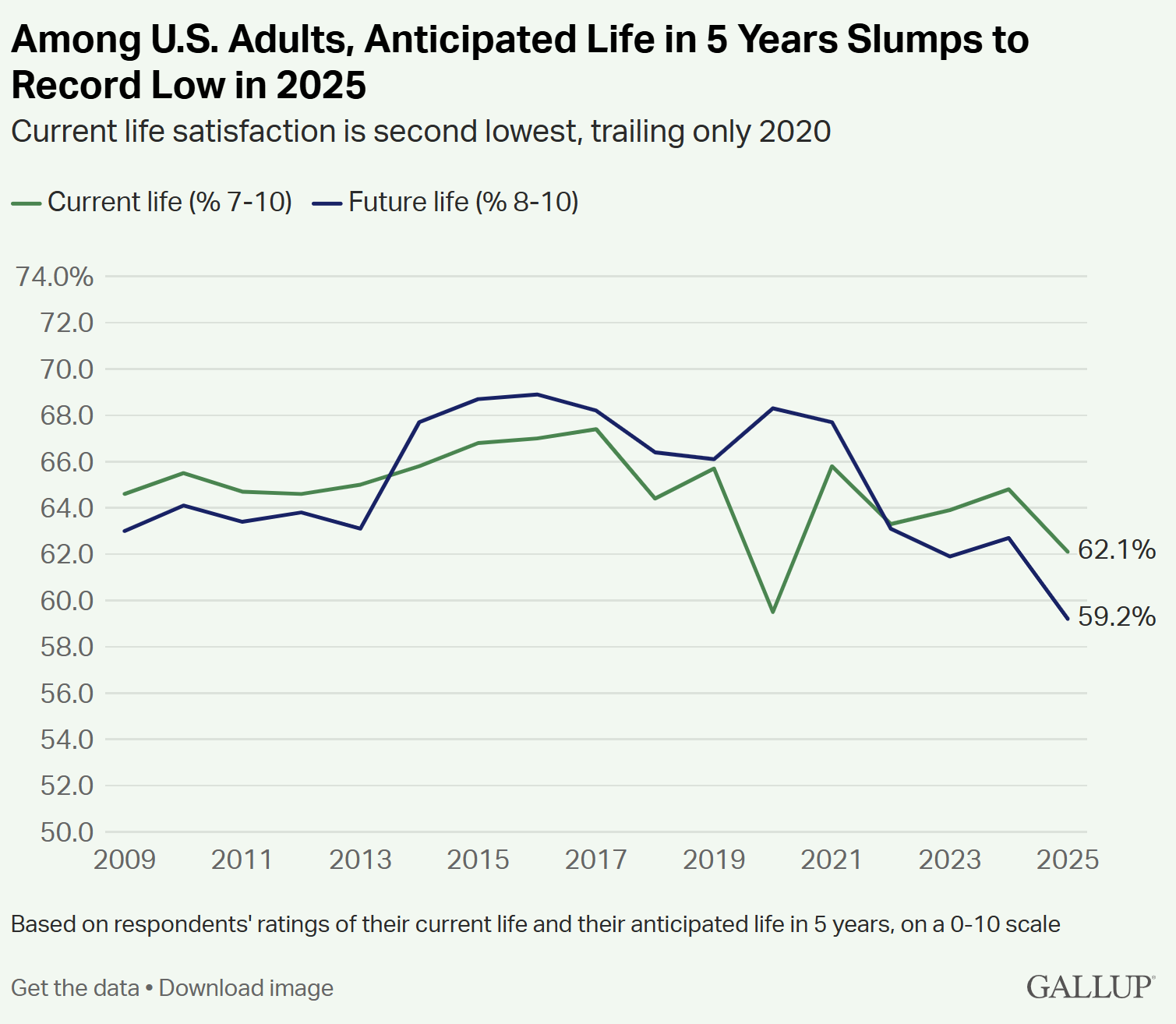
In 2025, just 62.1% of US adults said they were highly satisfied with their lives. That’s a -2.7 percentage point decrease from 2024. The only time Gallup recorded a lower score was in 2020 (59.5%), at the peak of the pandemic.
Americans are even more pessimistic about their future. Only 59.2% expect a high quality of life in five years. That’s a -3.5 point decrease from 2024, and the lowest reading ever recorded.
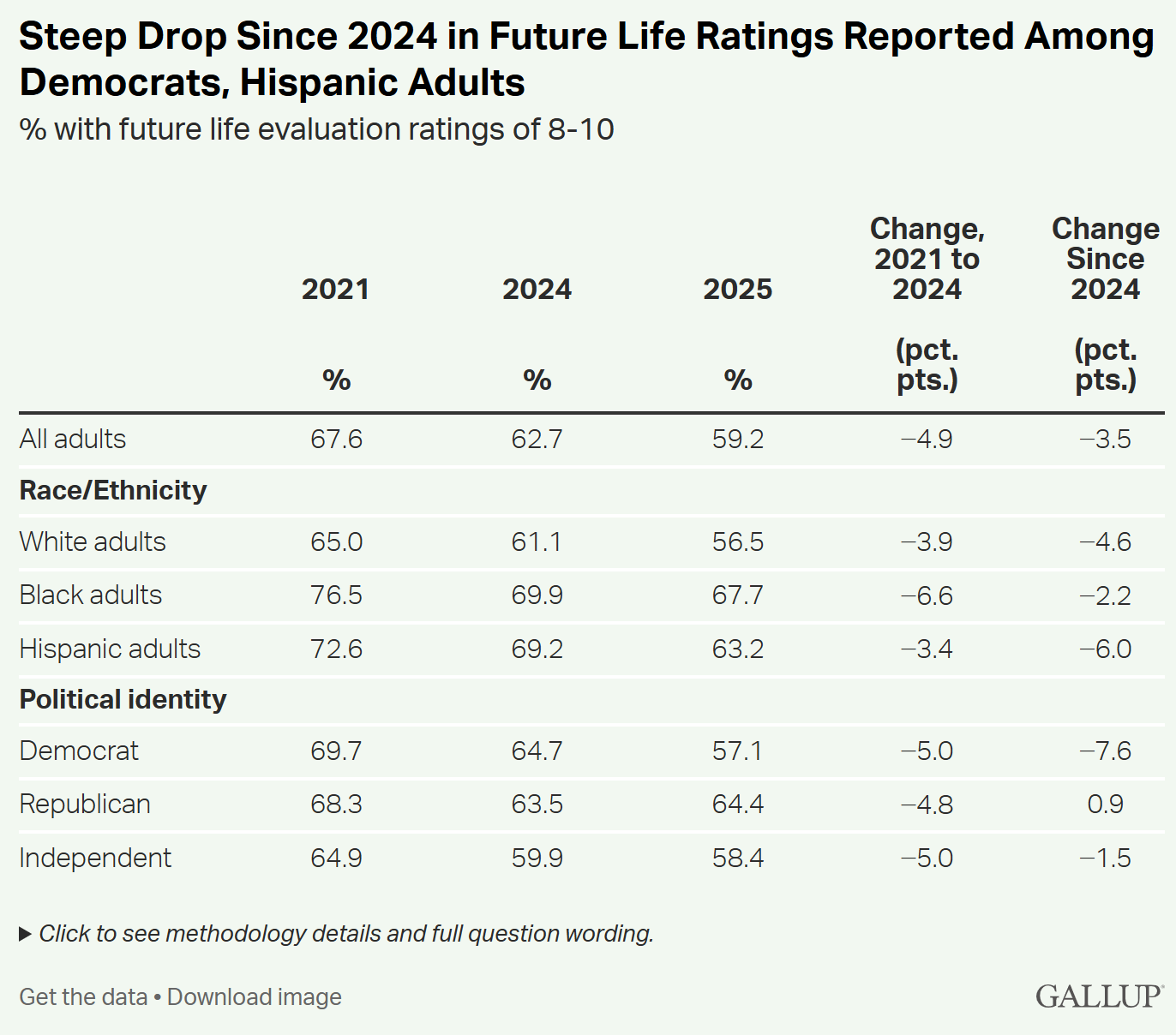
Between 2021 and 2024, declines in future life ratings were similar across political parties. Both Democrats and Republicans recorded a -5 point drop as inflation and the pandemic weighed broadly on the public.
That alignment broke slightly between 2024 and 2025. Over the past year, Democrats’ optimism fell by -7.6 points, while Republicans’ rose by +0.9 points. The shift coincides with the change in White House control. A similar but reverse pattern occurred after the 2020 election, when partisan outlooks moved in opposite directions following Biden’s victory: Democrats recorded a +4.4 point rise in optimism, while Republicans recorded a -5.9 point decline.
Quarterly data suggest the erosion in optimism may get worse. Gallup’s readings show a sharp drop in both Q3 and Q4 of 2025: Just 48% of Americans said they were thriving in their current lives and expected to thrive in the future. The opening weeks of 2026 have already been marked by political turbulence and controversy, offering little evidence of a rebound in mood.
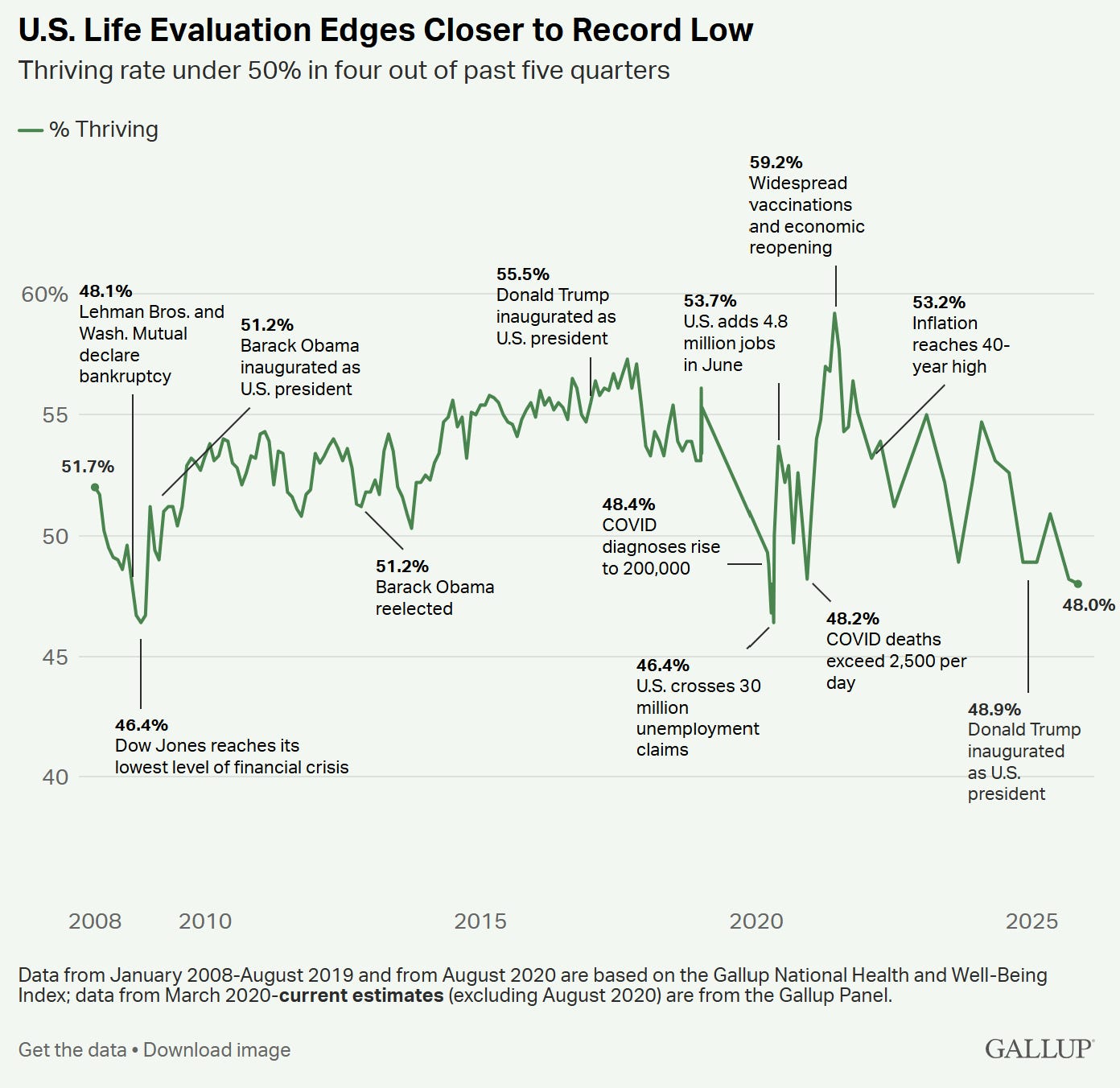
Meanwhile, the S&P500 is bumping along near its all-time high. One wonders how much further the “thriving” share might shrink if the bottom dropped out of the market, as it did in the fall and winter 2008-09. History suggests it might drop down to around the neighborhood of 42%. That really would put gung-ho American optimism to the test.