



The world is getting happier, but not the English-speaking world. While global life satisfaction has improved, the Anglosphere is falling behind due to rising pessimism among younger generations.
Gallup has just released its 2026 World Happiness Report. The global survey asks over 1K respondents from each country to rank their lives, where zero equals the worst possible life, and ten equals the best. These scores are averaged over the last three years.
For the second consecutive year, no English-speaking country ranked among the world’s 10 happiest nations. New Zealand placed 11th, Australia 15th, the US 23rd, Canada 25th, and the UK 29th. The US now sits between Saudi Arabia (22nd) and Poland (24th). The top rankings continue to be dominated by Nordic countries, with Finland once again claiming the No. 1 spot.
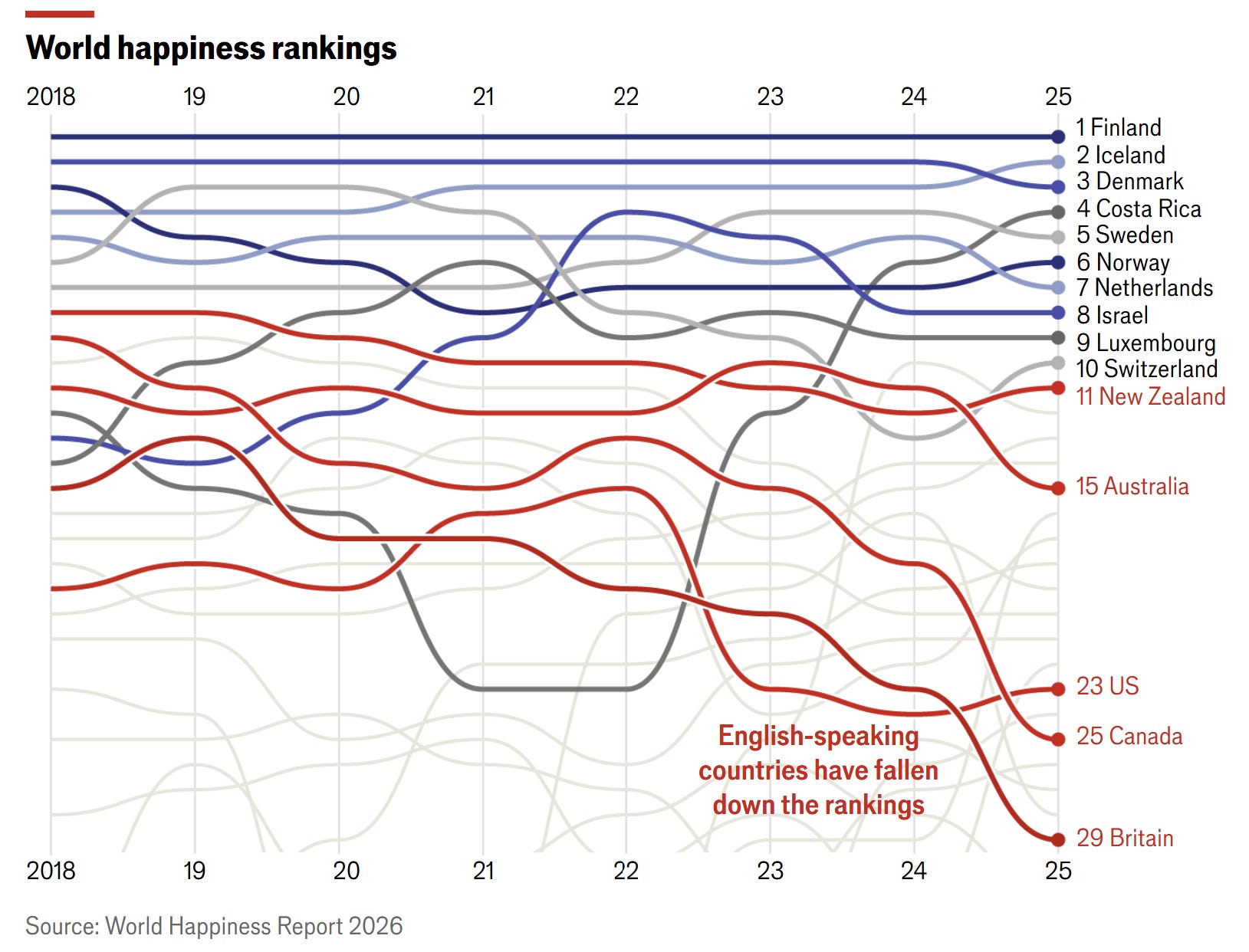
Since 2012, the global average happiness score has increased by +4.33 percentage points. In contrast, the Anglosphere has moved in the opposite direction, with an average decline of −5.08 points: the UK (−2.8), New Zealand (−3.1), the US (−3.8), Australia (−5.9), and Canada (−9.8).
This decline in Anglosphere life satisfaction is concentrated among younger generations. Among those under 25, the six largest declines in happiness since 2011 have all occurred in English-speaking countries.
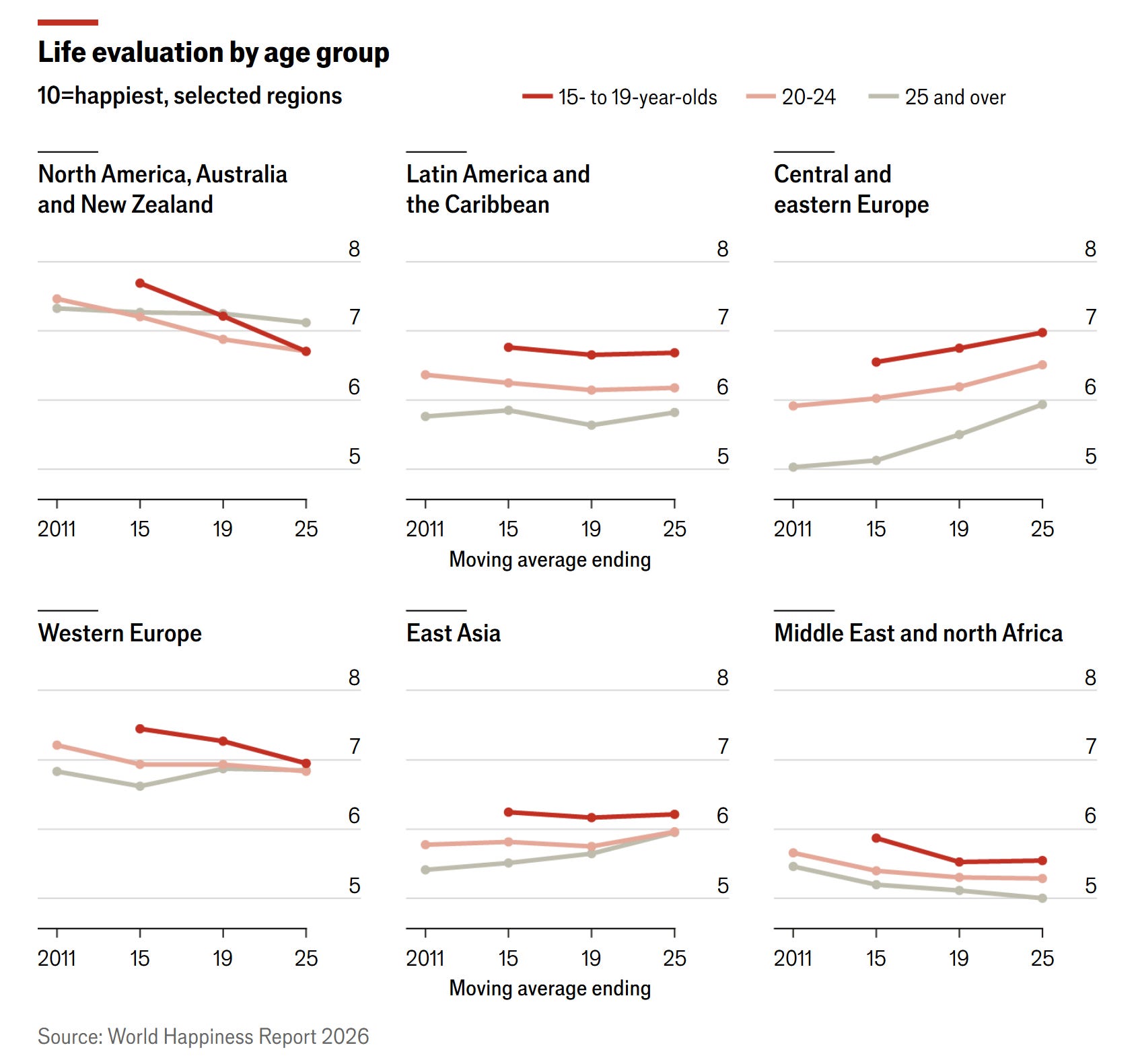
We’ve written extensively about the worsening mental health of young Americans. But this isn’t just a US story. Other surveys show that young people across the Anglosphere are reporting lower life satisfaction and growing distrust in institutions. And ultimately, this shift is fueling the rise of populist movements across these nations. (See “Generation Hopeless: The Despair of Young Americans” and “Global Millennials: Down on Democracy and Drawn to Populism.”)