



Americans are increasingly disconnected from their neighborhoods. Young adults, in particular, are far less likely to interact with their neighbors than they were a decade ago.
—Survey Center on American Life
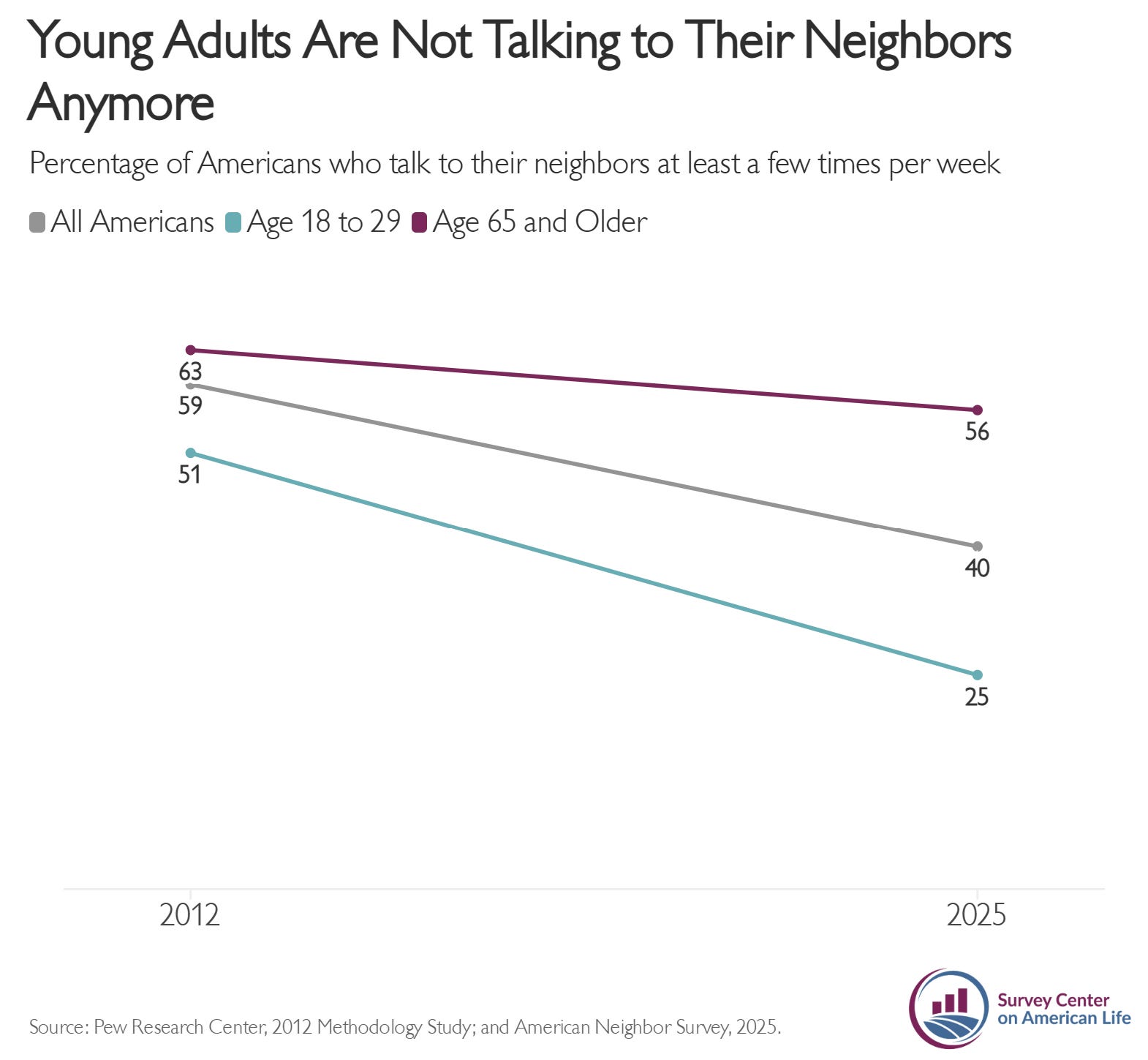
According to a new report from the Survey Center on American Life, Americans are interacting with their neighbors less often. In 2012, 59% of US adults said they spoke with their neighbors at least a few times a week. Today, just 40% say the same. That’s a -19 percentage point decline.
The drop in interaction has been especially sharp among young adults. Over the past 13 years, the share of 18- to 29-year-olds who talk with their neighbors weekly has fallen -26 percentage points to just 25%. By comparison, the share of adults aged 65 and older who regularly speak with their neighbors has declined only -7 percentage points to 56%.
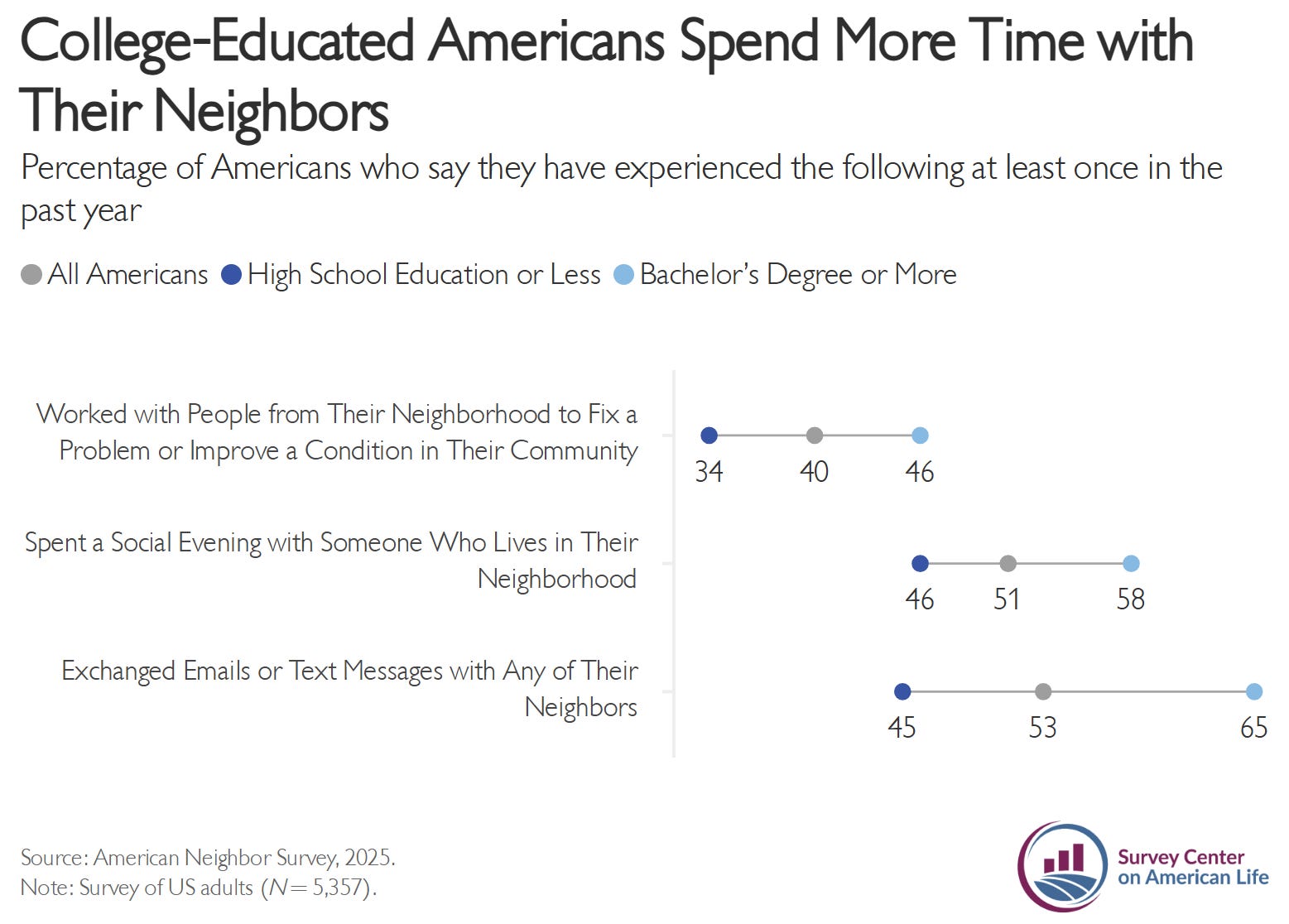
The survey also found that college-educated Americans are more engaged with their neighbors than those without a degree. Compared to non-college graduates, they are more likely to work with neighbors to solve local problems (46% vs. 34%), socialize with neighbors (58% vs. 46%), and exchange texts or emails with them (65% vs. 45%).
Importantly, these gaps persist even after controlling for whether respondents live in urban, suburban, or rural areas. The findings align with other recent surveys we’ve covered, which found that working-class Americans are more likely to report smaller social circles and weaker personal support networks than white-collar workers. (See “Divided by Wealth: How Class Shapes Our Friendships.”)
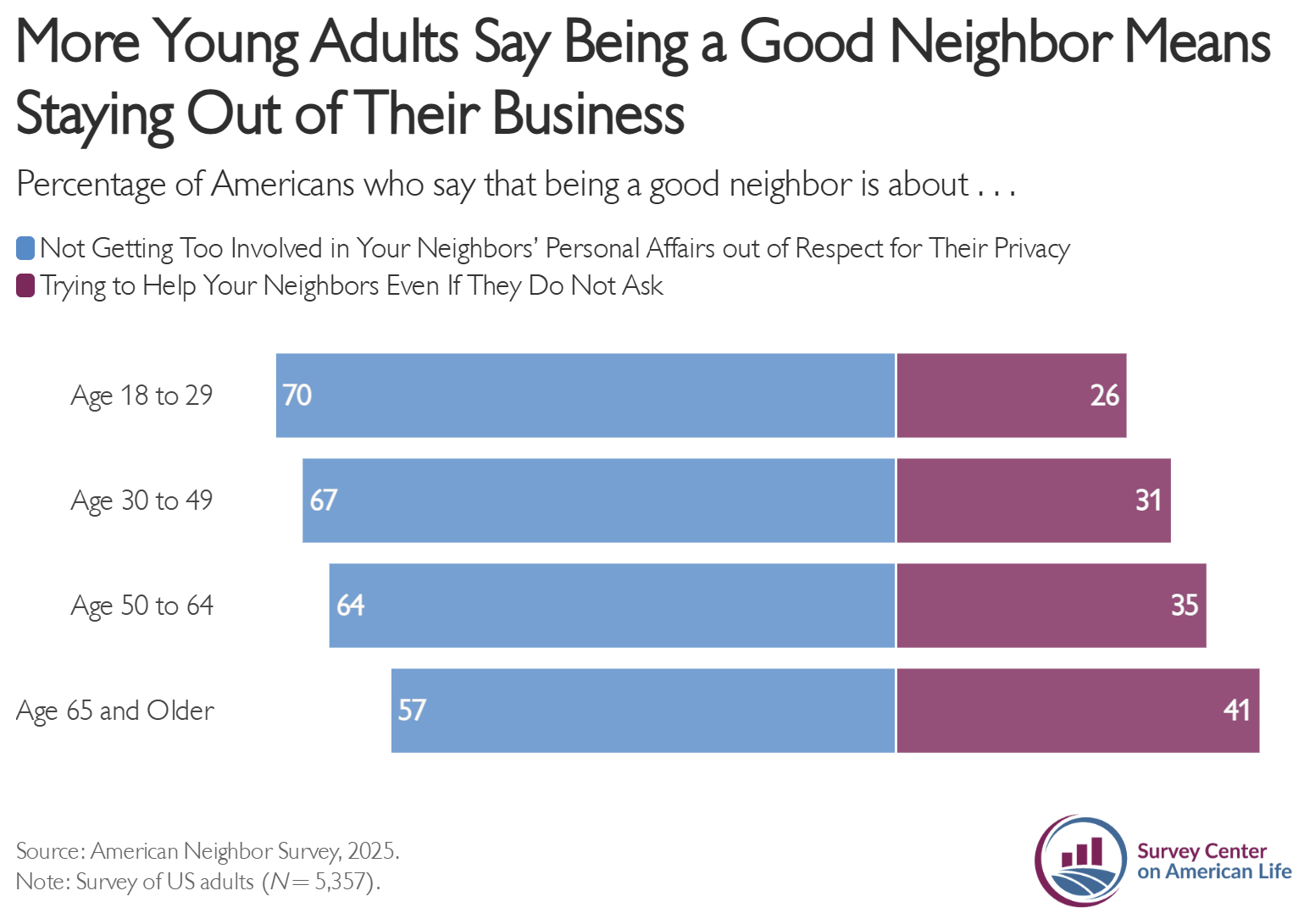
So what do Americans think makes a good neighbor? According to the survey, 65% say it means “not getting too involved in your neighbors’ personal affairs.” Only 33% say being a good neighbor means offering help even when it isn’t requested.
Views also differ sharply by age. Among young adults, 70% say good neighbors should stay out of personal matters, compared to just 57% of seniors. That’s a gap of 13 percentage points.
All in all, the report adds to a growing body of evidence that many Americans, especially younger Americans, are becoming increasingly isolated. (See “All the Lonely People” and “Where Have All Our Friends Gone?”) Traditional sources of community and social support, from churches to labor unions, have steadily lost influence over the past several decades. Now, even the most basic form of community, relationships with the people living next door, is fading.