




Over the last two decades, Americans have spent less and less time socializing. The decline has been especially steep among young people.
—BLS
The BLS just released the results of its 2025 American Time Use Survey. As we continue to analyze the data, one trend already stands out: Americans are spending less time together.
In 2003, Americans ages 15 and older spent an average of 47 minutes per day socializing face-to-face. By 2025, that had fallen to just 35 minutes, a decline of 12 minutes, or -26%.
While a 12-minute decline may not seem dramatic, the drop among young people has been far steeper. In 2003, Americans ages 15–24 spent an average of 61 minutes per day socializing. By 2025, that figure had fallen to just 35 minutes, a decline of 26 minutes, or -43%.
In fact, young adults recorded the largest decline in face-to-face socializing of any age group, both in absolute minutes and percentage terms. Americans aged 55-64 now spend more time hanging out than teenagers (40 minutes vs. 35 minutes).
So what’s behind this decline? The most obvious factor is the proliferation of smartphones, social media, and digital entertainment. Young people, in particular, now spend a significant share of their free time online: One Gallup poll found that teens spend an average of 4.8 hours per day on social media.
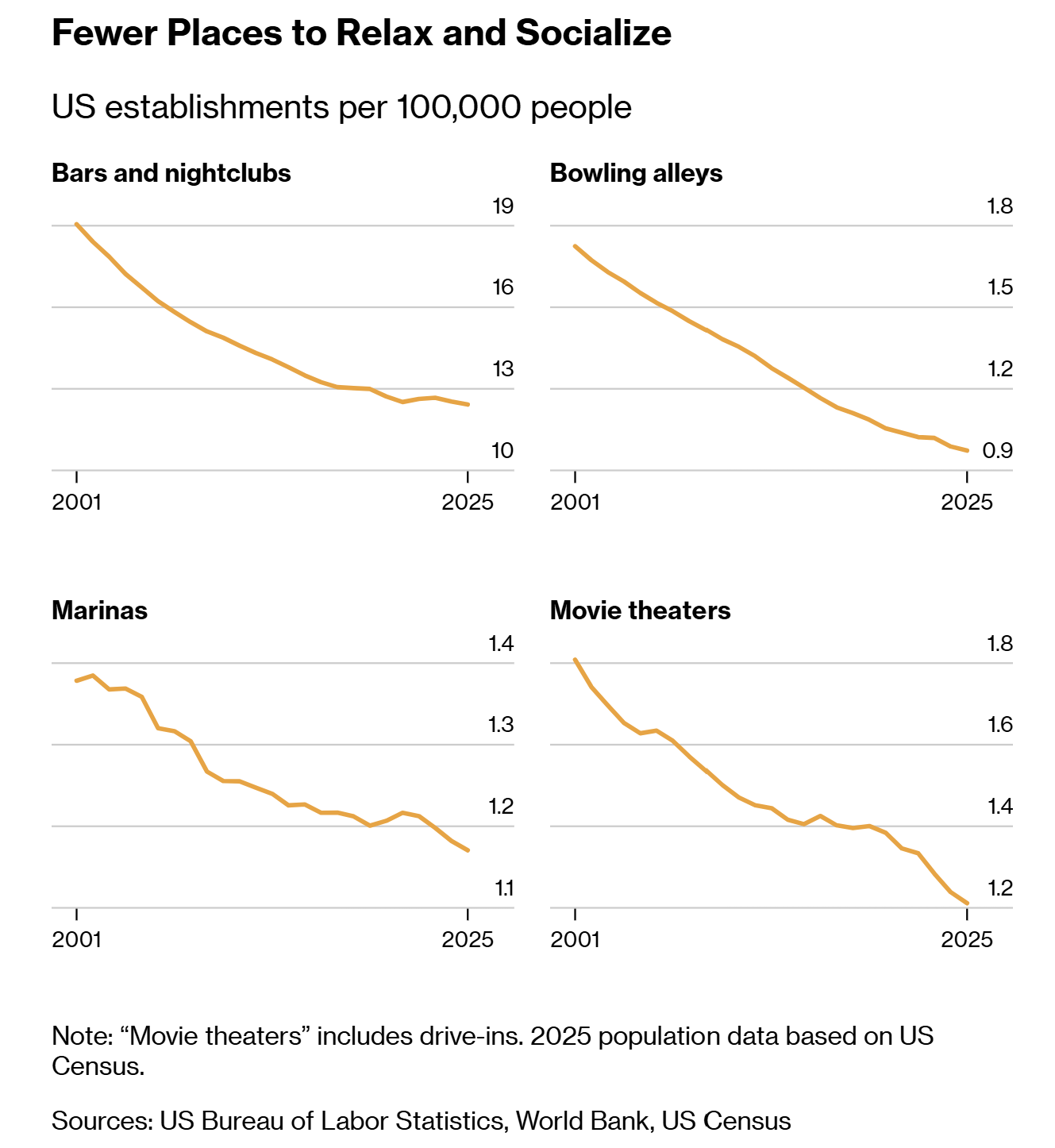
Another factor is the decline of “third places,” the spots outside the home and workplace where people gather, build friendships, and strengthen their communities. A recent analysis by Bloomberg found that over the last two decades, the US has lost over 2,000 golf courses and 7,000 bars. As these venues disappear, opportunities for casual face-to-face interaction diminish.
I suspect this trend will eventually reverse. Historically, periods of crisis have encouraged people to rebuild local institutions and reconnect with their communities. As we approach the apex of the current Fourth Turning, people will naturally band together.
And there are early signs of that shift taking place. For example, the Catholic Church has reported a notable increase in young men attending services, many of whom say they are searching for purpose and belonging—and, above all, community. (See “A New Religious Divide: Young Men vs. Young Women.”)